Optical & Lab Instruments
Navigating Precision: Your Guide to Optical & Laboratory Instrumentation
In the realms of scientific discovery, quality control, and industrial precision, the tools you employ are foundational to success. Optical & Lab Instruments represent a critical category of equipment, encompassing devices that measure, analyze, illuminate, and magnify. At instruments-meters.net, we specialize in providing a comprehensive portfolio of these essential tools, engineered for accuracy, durability, and repeatability. Whether you are setting up a new laboratory, upgrading existing systems, or sourcing a specific measurement device, understanding the technical specifications and applications of these instruments is paramount.
This resource is designed to serve as a detailed guide. We will delve into the core product categories, break down key technical parameters in a clear, structured manner, and answer common industry questions to assist in your procurement and operational decisions.
Core Product Categories and Specifications
Our inventory at instruments-meters.net is meticulously curated. Below is an overview of primary instrument types along with their defining parameters.
1. Microscopes
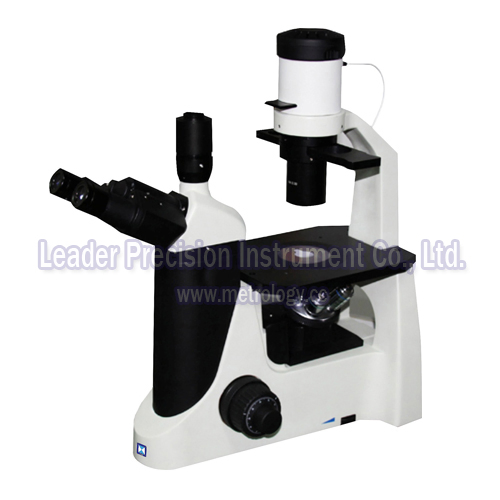
Essential for magnification and detailed observation, microscopes vary greatly by application.
- Optical Microscopes: Utilizing visible light and a system of lenses.
- Magnification Range: Often from 40x to 1000x.
- Objectives: Parfocal, achromatic, or plan objectives for reduced distortion.
- Illumination: LED, halogen, or fluorescent; Kohler illumination for even sample lighting.
- Stage: Mechanical stage with vernier scales for precise movement (e.g., 130mm x 125mm travel).
- Stereomicroscopes: For 3D observation of larger samples.
- Magnification: Fixed or zoom, typically 5x to 50x.
- Working Distance: Long working distances (e.g., 100mm+) for manipulation under the lens.
- Digital Microscopes: Integrate a camera sensor for image capture and display.
- Sensor: CMOS or CCD, 1MP to 20MP+.
- Output: USB 3.0, HDMI for real-time display.
- Software: Included for measurement, annotation, and reporting.
2. Spectrophotometers & Photometers
Instruments for measuring light intensity as a function of wavelength.
| Parameter | UV-Vis Spectrophotometer | Atomic Absorption (AA) Spectrometer | Colorimeter / Photometer |
|---|---|---|---|
| Wavelength Range | 190 nm - 1100 nm | Specific element lines (e.g., 213.9 nm for Zn) | Discrete filters (e.g., 540 nm, 620 nm) |
| Bandwidth | ≤ 2 nm (for high resolution) | Defined by monochromator slit | ±10-20 nm (filter dependent) |
| Accuracy | ±0.5 nm wavelength accuracy | Detection limits in ppb range | ±2% of full scale |
| Light Source | Deuterium & Tungsten lamps | Hollow Cathode Lamps (HCL) | LED or Tungsten lamp |
| Sample Handling | Cuvettes (10mm path common), flow cells | Nebulizer, flame or graphite furnace | Vials, cuvettes, or built-in chamber |
3. Refractometers & Polarimeters
For measuring refractive index and optical rotation, key in food, chemical, and pharmaceutical industries.
- Digital Refractometer:
- Measurement Range (nD): 1.3000 to 1.7000 RI.
- Accuracy: ±0.0002 RI.
- Scale: Brix (0-95%), Specific Gravity, Concentration %.
- Temperature Compensation: Automatic (ATC) via built-in sensor.
- Automatic Polarimeter:
- Angle Range: ±90° or ±180°.
- Accuracy: ±0.01°.
- Light Source: Sodium lamp (589.3 nm) or LED.
- Sample Tube Length: 50 mm, 100 mm, 200 mm standard.
4. Environmental & Dimensional Measuring Instruments
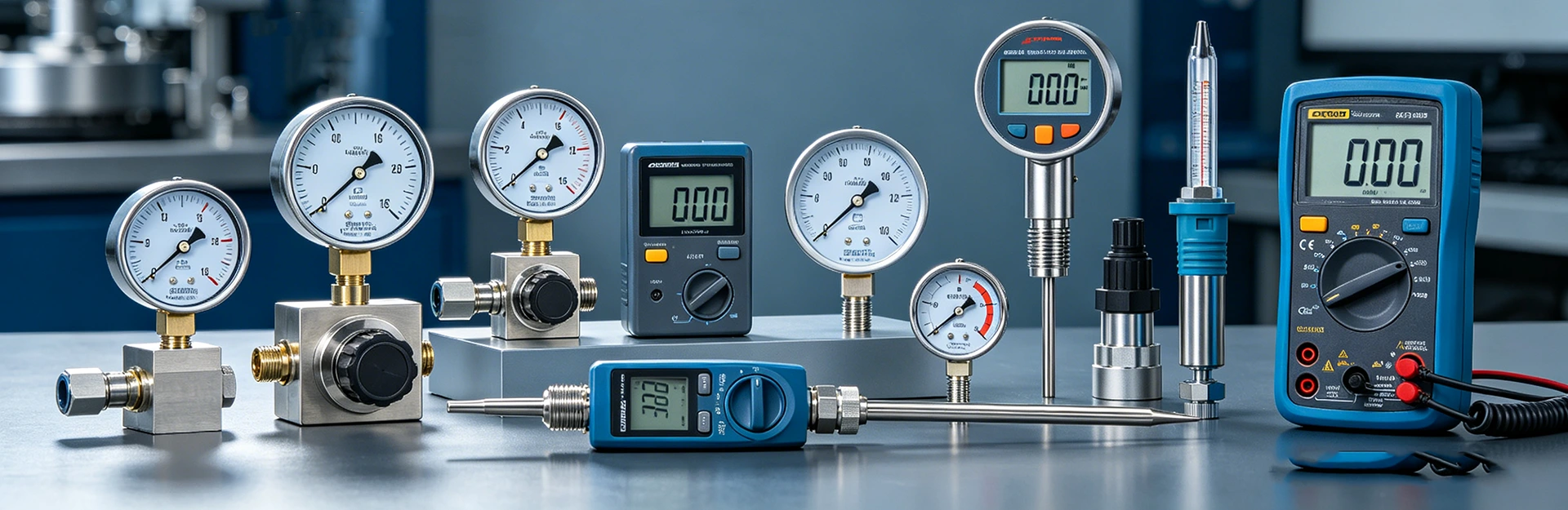
This broad category includes tools for physical and environmental parameter analysis.
| Instrument Type | Key Measurand | Typical Specifications | Application Example |
|---|---|---|---|
| Thickness Gauge (Ultrasonic) | Material Thickness | Range: 0.15mm to 500mm; Accuracy: ±0.01mm; Probe Frequency: 5 MHz. | Corrosion monitoring on pipes, tank walls. |
| Surface Roughness Tester | Surface Texture (Ra, Rz) | Ra Range: 0.05µm to 25µm; Stylus Tip Radius: 2µm; Traverse Length: 1.75mm to 17.5mm. | Quality control of machined parts. |
| Lux Meter / Light Meter | Illuminance | Range: 0.1 to 200,000 Lux; Accuracy: ±3% rdg ±10 digits; Spectral Response: Corrected to CIE photopic curve. | Workplace lighting assessment, grow light measurement. |
| pH Meter (Benchtop) | pH / Ion Concentration | Resolution: 0.01 pH; Accuracy: ±0.01 pH; Input Impedance: >10¹² Ω; Automatic Temperature Compensation. | Water quality labs, pharmaceutical solutions. |
Frequently Asked Questions (FAQ) on Optical & Lab Instruments
Q: What is the most important factor when choosing a microscope for routine laboratory work?
A: For general laboratory use, a compound binocular microscope with a magnification range of 40x to 400x or 1000x is standard. The critical factor is optical quality, specifically the type of objectives. Plan objectives provide a flat field of view across the entire image, which is essential for documentation and reducing eye strain. Equally important is a robust, stable mechanical stage and a reliable, bright LED illumination system that offers even lighting (Kohler illumination is a premium feature). Consider future needs; a trinocular head allows for adding a camera later.
Q: How often should I calibrate my spectrophotometer, and what does calibration involve?
A: Calibration frequency depends on usage, manufacturer recommendations, and compliance requirements (e.g., ISO, GLP). For rigorous environments, monthly or quarterly wavelength and photometric accuracy checks are common. Annual professional calibration is recommended. Calibration involves:
1. Wavelength Accuracy: Using a holmium oxide or didymium filter with known absorption peaks to verify the instrument's wavelength scale is correct.
2. Photometric (Absorbance) Accuracy: Using neutral density filters or standard solutions (like potassium dichromate) to verify the accuracy of absorbance readings.
3. Stray Light Check: Using a high-concentration solution to test for unwanted light outside the intended bandwidth.
Instruments from instruments-meters.net often come with traceable calibration certificates.
Q: What is the difference between a refractometer and a polarimeter?
A: Both analyze substances based on their interaction with light, but they measure different properties. A refractometer measures the refractive index—how much light bends when passing through a substance. This correlates directly with concentration and is used for sugar content (Brix), coolant concentration, and serum protein. A polarimeter measures optical rotation—the angle by which linearly polarized light is rotated when passing through an optically active substance (like sugars, amino acids, pharmaceuticals). It's specific for chiral compounds and is crucial in determining purity and concentration in industries like sugar, chemical, and pharma.
Q: Can I use a standard digital camera instead of a dedicated microscope camera?
A: While possible with adapters, dedicated microscope cameras from instruments-meters.net are superior for scientific work. Key differences: Scientific cameras have sensors optimized for low-light fluorescence, offer precise control over exposure and gain without automatic post-processing, provide accurate color representation critical for pathology, and output raw image data for measurement. They integrate seamlessly with microscopy software for stitching, measurement, and analysis. A standard DSLR may introduce noise, auto-adjust colors incorrectly, and lack the necessary interface for quantitative work.
Q: When selecting a thickness gauge, what do I need to know about my sample material?
A: Three material properties are vital for ultrasonic thickness gauges:
1. Sound Velocity: The speed at which ultrasound travels through the material (e.g., ~5920 m/s in steel, ~2300-2800 m/s in plastics). The gauge must be calibrated to this exact velocity for accurate readings.
2. Surface Condition: Rough, corroded, or painted surfaces may require a couplant gel and a lower-frequency probe (e.g., 2 MHz) to penetrate.
3. Temperature: High-temperature measurements require special high-temperature probes. Always check the probe's maximum operating temperature.
Providing this information to our team at instruments-meters.net ensures we recommend the correct gauge and probe.
Q: Why is input impedance an important specification for a pH meter?
A: Input impedance is the resistance to the flow of electrical current at the meter's input. It is critically important because the glass pH electrode itself has a very high internal resistance, often in the range of 10⁸ to 10¹² ohms. If the meter's input impedance is not significantly higher (typically >10¹² Ω), it will "load" the electrode circuit, causing a voltage drop and leading to inaccurate, drifting, or unstable pH readings. A high-input impedance ensures the meter measures the full voltage generated by the electrode without drawing significant current, guaranteeing accuracy and stability, especially in low-ionic-strength solutions.
Navigating the specifications of optical and laboratory instruments is key to making an informed investment. At instruments-meters.net, our expertise extends beyond supplying equipment; we provide the technical data and support necessary to match the perfect instrument to your application's specific demands for precision, reliability, and compliance.
- View as