
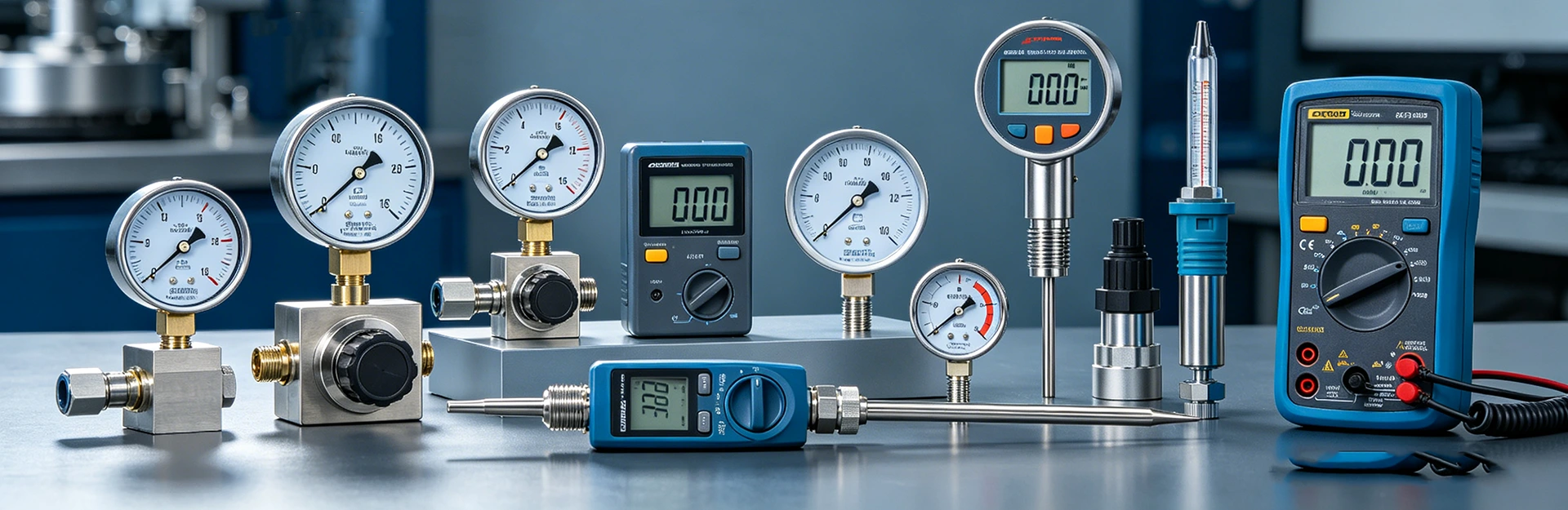
Meter for Liquid & Gas
Meter for Liquid & Gas: Precision Measurement Solutions
In the demanding worlds of industrial processing, energy management, and environmental monitoring, the accurate measurement of fluid flow is not just a requirement—it's a cornerstone of efficiency, safety, and profitability. A reliable Meter for Liquid & Gas is the critical component that translates the physical movement of substances into actionable, quantifiable data. At instruments-meters.net, we specialize in engineering and supplying advanced metering technology designed to meet the rigorous standards of modern industry. Our devices are built for durability, precision, and seamless integration into complex systems, ensuring you have complete confidence in your flow measurement data.
Core Product Parameters and Specifications
Understanding the technical specifications of a flow meter is essential for selecting the right tool for your application. Below is a detailed breakdown of the key parameters that define our Meter for Liquid & Gas offerings.
Primary Technical Specifications
- Measurement Principle: Our portfolio includes meters based on ultrasonic, Coriolis, turbine, magnetic, and differential pressure principles, allowing for selection based on fluid properties and accuracy needs.
- Flow Range (Turndown Ratio): High turndown ratios, often exceeding 100:1 for Coriolis meters, enable accurate measurement across a wide spectrum of flow rates from minimal to maximum capacity.
- Accuracy: Industry-leading accuracy, typically within ±0.5% of reading for liquids and ±1.0% for gases, with even higher precision available for Coriolis and ultrasonic models.
- Pressure Rating: Designed to withstand high-pressure environments, with standard ratings from ANSI Class 150 to Class 2500 and higher for specialized applications.
- Temperature Range: Robust construction allows for operation across extreme temperatures, typically from -40°C to +200°C (-40°F to +392°F), with options for higher ranges.
- Output Signals: Standard outputs include 4-20 mA analog, pulse/frequency, and digital communication protocols (HART, Modbus, PROFIBUS, Foundation Fieldbus).
- Power Supply: Flexible power options: 24 VDC, 110/220 VAC, or loop-powered for easy integration into existing infrastructure.
- Wetted Materials: A variety of materials such as 316L stainless steel, Hastelloy, titanium, and PTFE linings are available to ensure corrosion resistance and compatibility with aggressive media.
Comparative Table: Meter Types & Applications
| Meter Type | Best For | Key Advantages | Typical Accuracy |
|---|---|---|---|
| Coriolis Mass Flow Meter | High-value liquids, slurries, gases requiring mass measurement (kg/h, lb/h). | Direct mass measurement, high accuracy, unaffected by fluid properties. | ±0.1% to ±0.5% |
| Ultrasonic Flow Meter | Clean liquids, gases; custody transfer of water, hydrocarbons. | No pressure drop, bi-directional flow, clamp-on versions for non-invasive installation. | ±0.5% to ±1.0% |
| Magnetic Flow Meter (Magmeter) | Conductive liquids (water, acids, slurries, wastewater). | No moving parts, handles abrasive/slurry fluids, minimal maintenance. | ±0.2% to ±0.5% |
| Turbine Flow Meter | Clean, low-viscosity liquids and gases (petroleum, chemical, natural gas). | Cost-effective, good accuracy for its class, wide industry acceptance. | ±0.25% to ±0.5% |
| Differential Pressure (DP) Meter | Steam, gas, and liquid flows in wide-diameter pipes. | Simple design, well-understood technology, suitable for extreme temps/pressures. | ±1.0% to ±2.0% |
Detailed Feature Breakdown
Beyond core specs, our meters incorporate features that enhance longevity, usability, and data integrity.
- Advanced Diagnostics: Built-in self-diagnostics monitor meter health, detect issues like empty pipe conditions, gas bubbles in liquid, or sensor fouling, alerting operators proactively.
- Data Logging & Connectivity: Integrated data loggers store historical flow data. Cloud connectivity options via IoT gateways enable remote monitoring and integration with SCADA or ERP systems.
- Hazardous Area Certifications: Meters are available with ATEX, IECEx, CSA, and FM approvals for safe use in hazardous locations (Zone 0/1, Div 1/2).
- Dual-Chamber Electronics Housing: Provides superior protection for the electronic module against harsh environmental conditions, facilitating safe and easy maintenance without process shutdown.
- Calibration Traceability: Each meter is calibrated against standards traceable to NIST or equivalent national institutes, with certificates provided for audit and quality assurance.
Frequently Asked Questions (FAQ) about Meter for Liquid & Gas
Q: What factors are most critical when selecting a Meter for Liquid & Gas?
A: The selection process hinges on several key factors: the physical state (liquid, gas, slurry), fluid properties (viscosity, conductivity, corrosiveness, presence of solids), required accuracy, flow rate range, process pressure and temperature, pipe size, installation environment, and necessary output signals or communication protocols. A detailed discussion with our engineers at instruments-meters.net is recommended to ensure optimal selection.
Q: Can one meter accurately measure both liquids and gases?
A: Generally, most meters are optimized for one phase. However, certain meter types, like Coriolis and some ultrasonic meters, are capable of measuring both liquids and gases with high accuracy. The key is the meter's design and calibration. It is crucial to specify the exact media and conditions to the manufacturer. Using a meter outside its designated media type can lead to significant measurement errors or damage.
Q: How often does a flow meter need to be calibrated, and can it be done on-site?
A: Calibration frequency depends on the meter type, fluid characteristics, and the criticality of the measurement. For custody transfer, annual calibration is common. For less critical processes, intervals of 2-3 years may suffice. Many modern meters from instruments-meters.net support on-site verification using portable calibration equipment. For full traceable calibration, the meter can be returned to a certified lab or, for some designs, a replacement pre-calibrated measuring module can be installed.
Q: What is the difference between volumetric flow and mass flow, and which should I use?
A: Volumetric flow measures the volume of fluid passing a point per unit time (e.g., m³/h, GPM). Mass flow measures the mass of fluid passing per unit time (e.g., kg/h, lb/h). Mass flow is generally preferred for applications involving compressible gases, high-value fluids, or chemical reactions where the mass of material is the critical parameter, as it is unaffected by changes in temperature and pressure. Coriolis meters measure mass flow directly. Volumetric meters often require additional temperature and pressure sensors to compute corrected mass or standard volume.
Q: Are there low-maintenance options for measuring abrasive or slurry fluids?
A: Yes. Magnetic flow meters (Magmeters) with abrasion-resistant liners (like ceramic or polyurethane) and electrodes are excellent for conductive slurries as they have no moving parts to wear. Ultrasonic clamp-on meters are completely non-invasive, posing no wear risk. For non-conductive slurries, Coriolis meters with straight-tube designs minimize clogging. The experts at instruments-meters.net can recommend the most durable configuration for your specific abrasive media.
Q: How important is the turndown ratio, and what does it mean for my application?
A: The turndown ratio (or rangeability) is very important. It defines the ratio between the maximum and minimum flow rates over which the meter maintains its stated accuracy. A high turndown ratio (e.g., 100:1) means one meter can accurately measure flow during both low-load and peak-load conditions, providing greater operational flexibility and potentially eliminating the need for multiple meter runs. It ensures accuracy across the full operating cycle of your process.
Integration and Support from instruments-meters.net
Choosing the right Meter for Liquid & Gas is the first step. Proper installation, configuration, and ongoing support are what guarantee long-term performance. Our commitment extends beyond the sale. We provide comprehensive technical documentation, detailed installation guides, and wiring diagrams. Our global network of engineers and technicians offers startup assistance, training for your personnel, and readily available spare parts and repair services. With instruments-meters.net, you gain a partner dedicated to ensuring your measurement systems operate at peak efficiency for years to come, providing the reliable data foundation necessary for informed decision-making and operational excellence.
- View as