
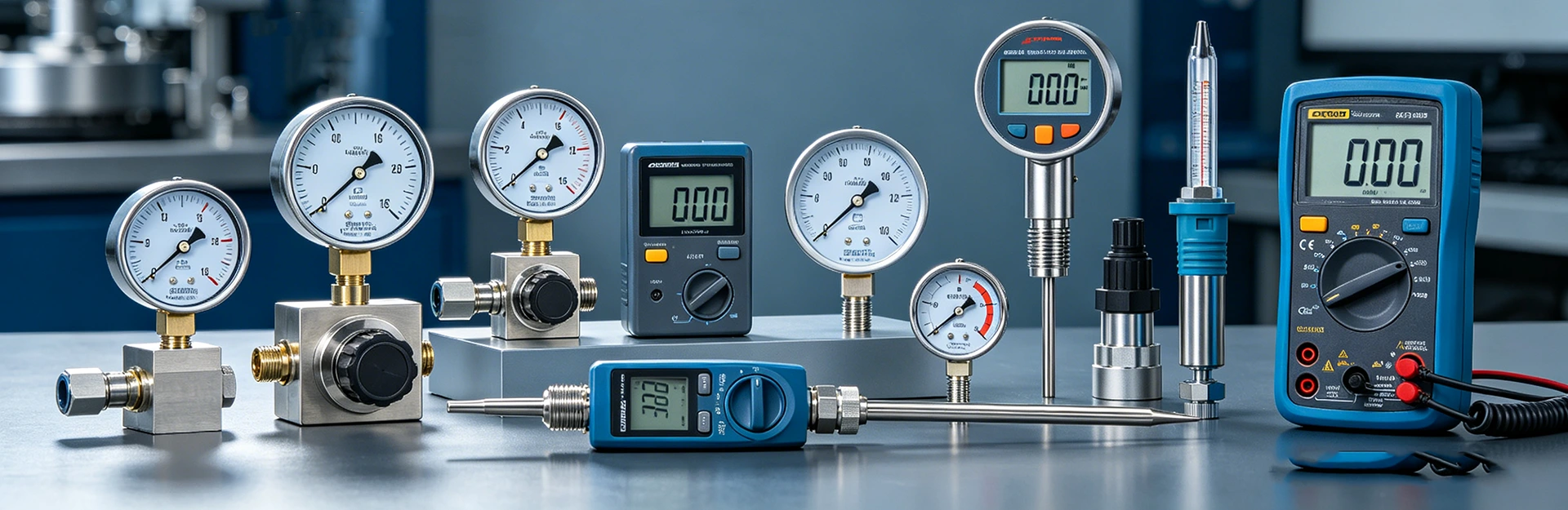
Analysis Instrument
Comprehensive Overview of Analysis Instruments
In the modern laboratory, industrial facility, and research environment, the role of precise Analysis Instrumentation is paramount. These devices form the backbone of quality control, research and development, and diagnostic procedures across a myriad of sectors, including pharmaceuticals, environmental science, food and beverage, petrochemicals, and material science. An analysis instrument is engineered to qualitatively or quantitatively determine the composition, properties, or structure of a substance. The accuracy, reliability, and efficiency of these tools directly impact product quality, safety standards, and the pace of innovation. As a leading provider of high-precision measurement solutions, instruments-meters.net is dedicated to equipping professionals with the advanced tools necessary to achieve uncompromising analytical results. Our portfolio encompasses a wide range of instruments designed to meet the rigorous demands of contemporary analytical challenges.
Detailed Product Parameters and Specifications
Understanding the technical specifications of an analysis instrument is crucial for selecting the right tool for your specific application. Below, we detail the core parameters for key categories of instruments available at instruments-meters.net.
Key Parameters for Spectrophotometers
- Wavelength Range: Defines the spectrum of light the instrument can measure (e.g., UV-Vis: 190-1100 nm; Vis: 320-1100 nm).
- Bandwidth: The width of the wavelength band passed by the monochromator, affecting resolution (typically 1-5 nm).
- Photometric Accuracy: The accuracy of absorbance measurements, usually expressed as ±0.002 A or similar.
- Stray Light: Unwanted light outside the nominal bandwidth; a lower value (<0.05% at 220 nm) indicates better performance.
- Detector Type: Silicon photodiode, CCD, or PMT, influencing sensitivity and dynamic range.
Core Specifications for Chromatography Systems (HPLC/GC)
| Parameter | HPLC System | GC System |
|---|---|---|
| Pressure Limit | Up to 6000 psi / 400 bar | Not Applicable |
| Flow Rate Accuracy | ±1% or better | Carrier Gas Flow Control: ±0.01 mL/min |
| Temperature Range (Oven) | Ambient to 80°C (Column Compartment) | Ambient +4°C to 450°C |
| Detector Options | UV-Vis DAD, RID, FLD, MS | FID, TCD, ECD, NPD, MS |
| Injection Volume Precision | RSD < 0.5% for auto-sampler | RSD < 1.0% for auto-injector |
Essential Features of pH & Conductivity Meters
- pH Measurement Range: Typically -2.000 to 20.000 pH.
- pH Resolution: 0.1, 0.01, or 0.001 pH units.
- pH Accuracy: ±0.002 pH for high-precision models.
- Conductivity Range: From 0.001 µS/cm to 1000 mS/cm, covering ultrapure water to concentrated solutions.
- Automatic Temperature Compensation (ATC): Essential for accurate readings across varying sample temperatures.
- Calibration Points: Support for multi-point calibration (up to 5 points) with automatic recognition of standard buffers.
Critical Parameters for Balances and Scales
| Type | Capacity | Readability | Precision (Repeatability) | Pan Size |
|---|---|---|---|---|
| Analytical Balance | 52 g to 520 g | 0.1 mg / 0.01 mg | ±0.1 mg | 80 mm Ø |
| Precision Balance | 300 g to 12 kg | 0.001 g to 0.1 g | ±0.002 g | 180 x 180 mm |
| Moisture Analyzer | Up to 100 g | 0.001 g / 0.01% | ±0.02% (moisture) | 90 mm Ø |
Frequently Asked Questions (FAQs) About Analysis Instruments
Q: What factors are most critical when selecting a new spectrophotometer for my lab?
A: The key factors include your required wavelength range (UV, Vis, or NIR), the desired spectral bandwidth for resolution needs, photometric accuracy for data reliability, sample throughput requirements (considering cell format or microplate compatibility), and connectivity/software for data management. For routine quantitative analysis in the visible range, a robust single-beam instrument may suffice. For research requiring full spectrum scans and method development, a high-accuracy double-beam or diode array instrument from instruments-meters.net is recommended.
Q: How often should I calibrate my pH meter, and what is the proper procedure?
A: Calibration frequency depends on usage intensity, the accuracy required, and the nature of samples. For critical work, daily calibration is advised. For general use, calibrate at least once a week or whenever the electrode has been dry for an extended period. The proper procedure involves: 1) Using fresh, certified buffer solutions (typically pH 4.01, 7.00, and 10.01). 2) Rinsing the electrode with deionized water and blotting dry gently. 3) Immersing the electrode in the first buffer, allowing the reading to stabilize, and then calibrating. 4) Repeating with the second (and third) buffer. Always perform a multi-point calibration spanning your expected measurement range.
Q: What is the main difference between an HPLC detector and a GC detector, and how do I choose?
A: The core difference stems from the state of the mobile phase: HPLC uses a liquid, while GC uses a gas. Therefore, detectors are optimized for these phases. Common HPLC detectors (like UV-Vis, Refractive Index) measure properties of solutes in liquid effluent. Common GC detectors (like Flame Ionization, Thermal Conductivity) measure properties of vaporous compounds. The choice is primarily dictated by your analytes. For non-volatile or thermally labile compounds (e.g., proteins, sugars), HPLC is suitable. For volatile, thermally stable compounds (e.g., hydrocarbons, solvents), GC is ideal. The specific detector (e.g., Mass Spectrometer for both) is then chosen based on required sensitivity, selectivity, and whether qualitative or quantitative data is needed.
Q: Why is the precision (readability) of a balance different from its accuracy?
A: Precision (often indicated by readability, e.g., 0.1 mg) refers to the smallest difference in weight the balance can display reliably—its fineness of measurement. Accuracy, however, refers to how close the displayed weight is to the true mass of the object. A balance can be precise (show very fine changes) but inaccurate (consistently off by a certain amount) if it is not properly calibrated or is affected by environmental factors like drafts or vibration. Regular calibration with certified weights is essential to ensure both the precision and accuracy of your balance from instruments-meters.net.
Q: How can I extend the lifespan and maintain the performance of my analytical instruments?
A: Proactive maintenance is crucial. Key practices include: following the manufacturer's operation and cleaning guidelines meticulously; establishing regular calibration and verification schedules; providing a stable operating environment (controlled temperature, humidity, and free from vibrations or electrical interference); using high-quality consumables and reagents (e.g., HPLC-grade solvents, certified buffer solutions); storing electrodes and probes properly in recommended storage solutions; and scheduling periodic professional servicing. Keeping detailed logbooks for each instrument at instruments-meters.net helps track performance history and maintenance needs.
- View as