Telescope & Binoculars
The Ultimate Guide to Telescopes & Binoculars: Precision for Every Explorer
For astronomers, birdwatchers, hobbyists, and adventurers, the right optical instrument opens up new worlds. Whether you're gazing at the rings of Saturn or observing wildlife from a respectful distance, the quality of your Telescope & Binoculars is paramount. At instruments-meters.net, we specialize in providing high-performance, reliable optical tools engineered for clarity, durability, and user satisfaction. This guide delves into the critical parameters that define excellence in telescopes and binoculars, helping you make an informed choice for your next exploration.
Decoding Telescope Specifications
A telescope's capability is defined by its core optical specifications. Understanding these parameters is the first step to choosing the perfect instrument for your celestial journeys.
- Aperture: The diameter of the primary lens or mirror. It is the most critical specification, determining the telescope's light-gathering power and resolution. A larger aperture reveals fainter objects and finer detail.
- Focal Length: The distance light travels inside the telescope from the primary lens/mirror to the focal point. It influences the telescope's magnifying power and field of view.
- Focal Ratio (f/): The focal length divided by the aperture (e.g., f/10). A lower focal ratio (e.g., f/5) provides a wider field of view, ideal for deep-sky objects, while a higher ratio (e.g., f/10) offers higher magnification for planetary viewing.
- Mount Type: The stability and ease of tracking objects depend on the mount. Alt-Azimuth mounts are simple and intuitive for beginners. Equatorial mounts are essential for advanced astrophotography, as they compensate for Earth's rotation.
- Optical Design: Refractors use lenses, offering crisp, low-maintenance views. Reflectors use mirrors, providing large apertures at a lower cost. Compound telescopes (like Schmidt-Cassegrains) combine both for a compact, versatile design.
Key Binoculars Parameters Explained
Binoculars are your portable windows to both terrestrial and celestial wonders. Their specifications balance magnification, brightness, and field of view.
| Parameter | Description | Typical Range & Impact |
|---|---|---|
| Magnification (e.g., 10x) | How many times closer the object appears. The first number in the model designation (e.g., 10x50). | 8x to 12x for general use. Higher magnification requires steadier hands or a tripod. |
| Objective Lens Diameter (e.g., 50mm) | The diameter of the front lenses in millimeters. The second number in the model designation. | Larger lenses gather more light, providing brighter images, especially in low-light conditions. |
| Exit Pupil | Calculated by dividing the objective lens diameter by the magnification (e.g., 50/10 = 5mm). | A larger exit pupil (e.g., 5mm) provides a brighter view, crucial for dawn, dusk, or astronomy. |
| Field of View | The width of the area visible through the binoculars, usually expressed in feet at 1000 yards or degrees. | A wider field of view makes it easier to locate and track moving objects like birds or sports action. |
| Prism Type & Coatings | BaK-4 prisms offer superior optical quality to BK-7. Fully multi-coated lenses maximize light transmission and image contrast. | Essential for image sharpness, color fidelity, and overall viewing comfort. A mark of premium optics from instruments-meters.net. |
Our Featured Optical Instruments
At instruments-meters.net, we curate instruments that excel across these key parameters. Here are detailed specifications for two of our flagship models.
Advanced Aperture Reflector Telescope
| Specification | Detail |
|---|---|
| Model | instruments-meters.net IM-AT200 |
| Optical Design | Newtonian Reflector |
| Aperture | 203mm (8 inches) |
| Focal Length | 1200mm |
| Focal Ratio | f/5.9 |
| Mount | Computerized Equatorial GoTo Mount |
| Included Eyepieces | 25mm Plössl (48x), 10mm Plössl (120x) |
| Best For | Deep-sky objects (galaxies, nebulae), planetary detail, astrophotography |
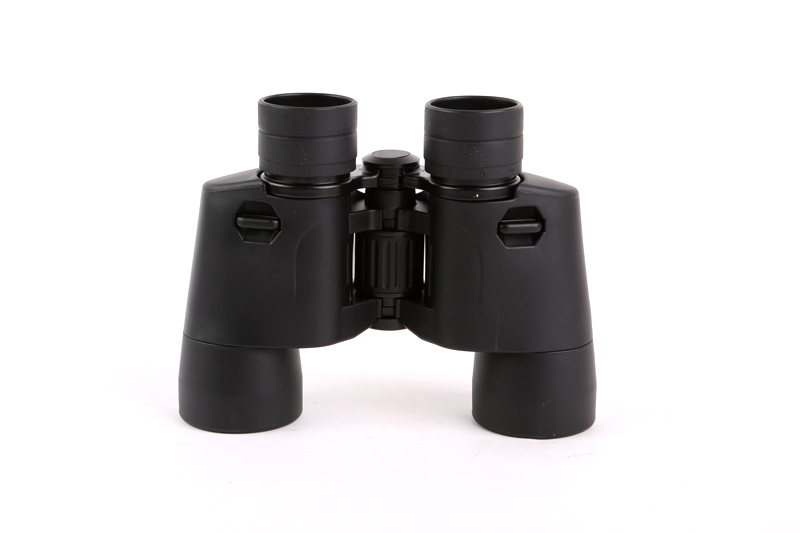
High-Performance Roof Prism Binoculars
| Specification | Detail |
|---|---|
| Model | instruments-meters.net IM-ED1042 |
| Magnification | 10x |
| Objective Lens Diameter | 42mm |
| Prism Type | BaK-4 Roof Prisms |
| Lens Coatings | Fully Multi-Coated, Phase-Corrected |
| Exit Pupil | 4.2mm |
| Field of View | 340 feet at 1000 yards |
| Waterproof & Fog-proof | Yes, Nitrogen Purged |
| Best For | Birdwatching, wildlife observation, sports events, hiking |
Telescope & Binoculars FAQ
Q: What is more important for a beginner, a telescope's magnification or its aperture?
A: Aperture is far more important for beginners. High magnification on a small, shaky telescope results in a dim, blurry image. A larger aperture (e.g., 70mm refractor or 130mm reflector) gathers more light, providing brighter, sharper views of the Moon, planets, and star clusters, which is more rewarding and educational for a novice. Start with a moderate aperture and a stable mount.
Q: Can I use regular binoculars for stargazing?
A: Absolutely. In fact, binoculars are an excellent and often recommended tool for beginning astronomy. Their wide field of view makes it easy to find objects like the Pleiades star cluster, the Andromeda Galaxy, and to scan the Milky Way. Look for binoculars with a larger exit pupil (e.g., 7x50, which gives a 7.1mm exit pupil) for the brightest views in dark skies. Models from instruments-meters.net with fully multi-coated optics are ideal for this purpose.
Q: What does "fully multi-coated" mean for binoculars, and why does it matter?
A: "Fully multi-coated" indicates that every air-to-glass surface in the binoculars (on all lenses and prisms) has multiple layers of anti-reflective coatings. This technology is crucial because it dramatically increases light transmission (often above 90%), resulting in a brighter, sharper, and higher-contrast image. It also reduces internal glare and ghosting, especially when viewing bright objects against a dark background. This is a key feature of professional-grade optics.
Q: What is the difference between an Alt-Azimuth and an Equatorial telescope mount?
A: An Alt-Azimuth mount moves in two simple directions: up/down (altitude) and left/right (azimuth). It's intuitive, like a camera tripod, and is common on beginner scopes. An Equatorial mount is aligned with Earth's axis. It has one axis (right ascension) that rotates to precisely counter Earth's spin, allowing you to track celestial objects smoothly by turning a single knob or using a motor drive. This is essential for long-exposure astrophotography and comfortable high-magnification viewing.
Q: How do I calculate the real magnification and field of view when using a telescope with different eyepieces?
A: Telescope magnification is calculated as: Telescope Focal Length / Eyepiece Focal Length. For example, a telescope with a 1000mm focal length using a 20mm eyepiece gives 50x magnification (1000/20=50). The true field of view is approximately: Eyepiece Apparent Field of View / Magnification. If that 20mm eyepiece has a 50-degree apparent field, the true field seen in the sky is about 1 degree (50/50). Our product pages at instruments-meters.net provide these calculations for various eyepiece combinations.
Q: Are waterproof and fog-proof features necessary for binoculars?
A: For any serious outdoor use, yes. Waterproof (often via O-ring seals) and fog-proof (achieved by purging internal air with dry nitrogen or argon) construction protects the internal optics from moisture, fungus, and dust. This ensures durability and reliable performance in rain, high humidity, or extreme temperature changes, whether you're on a boat, in a rainforest, or observing in dewy morning grass. All outdoor-grade binoculars from instruments-meters.net include this robust construction.
- View as