Geographic Surveying Instrument
Geographic Surveying Instruments: Precision Tools for Mapping the World
For professionals in cartography, construction, civil engineering, and land development, the accuracy of data is paramount. A Geographic Surveying Instrument is the cornerstone of this precision, enabling the exact measurement and mapping of terrestrial or three-dimensional positions. At instruments-meters.net, we supply a comprehensive range of advanced surveying equipment designed to meet the rigorous demands of modern surveying applications, from traditional land boundary marking to complex 3D modeling for infrastructure projects.
Understanding the core categories of geographic surveying instruments is crucial for selecting the right tool. The primary types include:
* **Total Stations:** The workhorse of modern surveying, combining an electronic theodolite (for measuring angles) with an electronic distance meter (EDM). They measure slope distances, horizontal and vertical angles, and perform coordinate geometry calculations on-board.
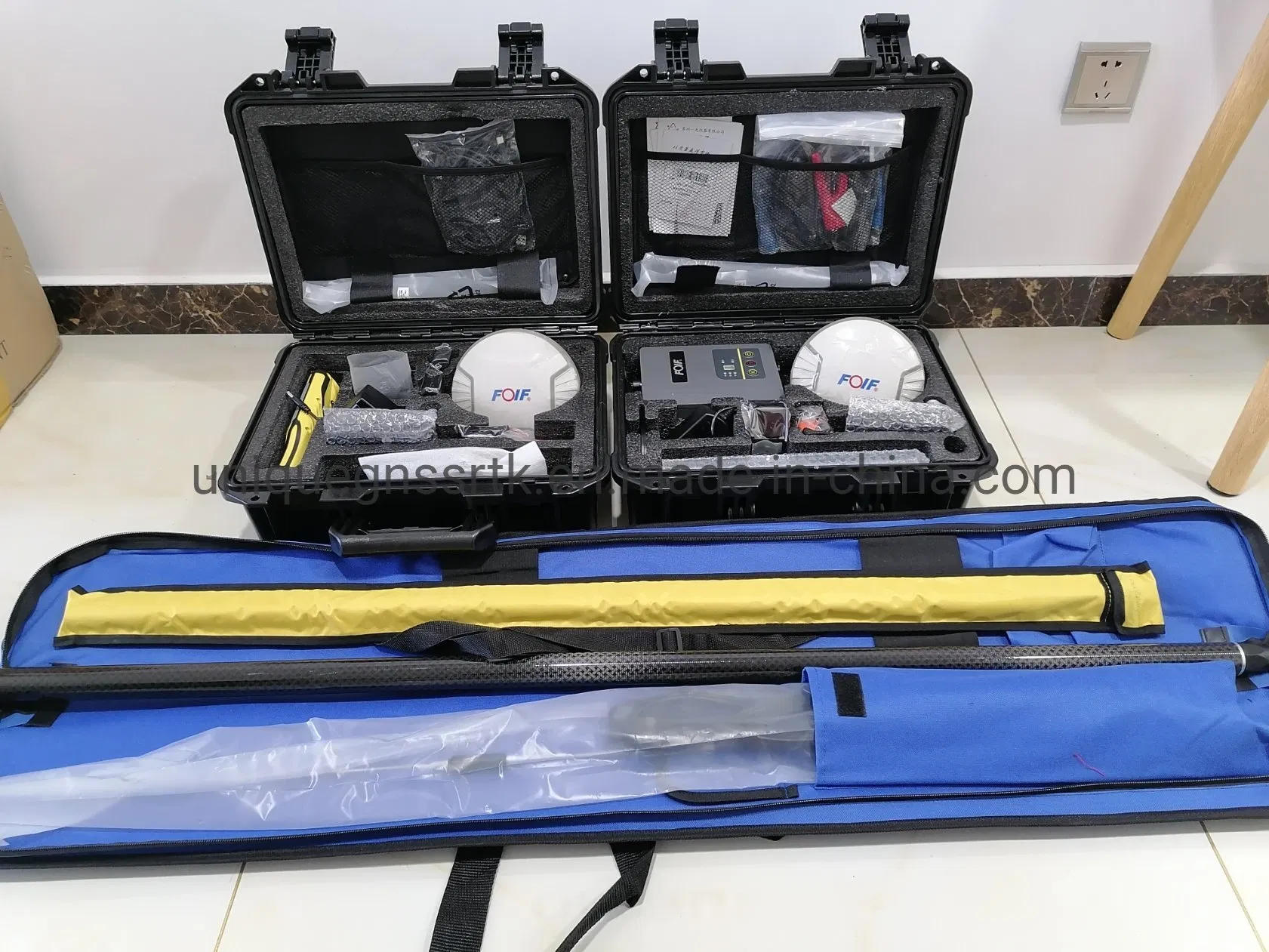
* **GPS/GNSS Receivers:** These instruments use signals from satellite constellations (like GPS, GLONASS, Galileo, BeiDou) to determine precise geographic coordinates (latitude, longitude, and elevation) anywhere on the globe with centimeter-level or even millimeter-level accuracy in advanced systems.
* **Leveling Instruments (Automatic Levels, Digital Levels):** Used primarily for determining height differences and establishing elevations over a site. They provide a level line of sight to read measurements from a graduated staff.
* **Laser Scanners (Terrestrial & Mobile):** These instruments capture millions of 3D data points (point clouds) of structures, landscapes, or construction sites with incredible speed, creating highly detailed digital models for analysis, as-built documentation, and volume calculations.
* **Theodolites:** The fundamental instrument for measuring horizontal and vertical angles. While largely integrated into total stations, standalone optical or digital theodolites are still used for specific alignment and angle measurement tasks.
* **Unmanned Aerial Vehicles (UAVs/Drones) with Photogrammetry Payloads:** Equipped with high-resolution cameras or LiDAR sensors, drones capture aerial imagery and data that is processed to create orthomosaics, topographic maps, and 3D models of large or inaccessible areas.
**Key Technical Parameters for Evaluating Surveying Instruments**
When investing in a professional-grade geographic surveying instrument, several critical specifications determine its capability, accuracy, and suitability for your projects. Here is a detailed breakdown:
**1. Angular Accuracy & Distance Measurement Accuracy:**
This is the most critical parameter defining an instrument's precision.
* **Angular Accuracy:** Expressed in seconds (") or milliradians. It indicates the smallest angle the instrument can reliably measure. A lower number signifies higher precision (e.g., 1" is more precise than 5").
* **Distance Accuracy:** Typically given as a constant error + a scale error (e.g., ±(2 mm + 2 ppm)). The constant error is a fixed uncertainty, while the ppm (parts per million) error scales with the distance measured.
**2. Range & Operational Specifications:**
* **Measurement Range (Prism/Non-Prism):** The maximum distance the EDM can measure to a prism (highly reflective target) and, if equipped, to a natural surface (non-prism or reflectorless mode). Non-prism range is typically shorter.
* **Magnification & Image Quality:** For optical instruments, the power of the telescope (e.g., 30x) and the quality of the optics affect target acquisition and clarity.
* **Data Storage & Connectivity:** Onboard memory capacity, Bluetooth, Wi-Fi, USB, and cellular capabilities for data transfer and field-to-office workflow integration.
* **Battery Life:** Operating time on a single charge is vital for field productivity.
* **Environmental Rating (IP Code):** The Ingress Protection rating (e.g., IP65) defines resistance to dust and water, ensuring reliability in harsh weather conditions.
**3. Specialized Features:**
* **Motorization & Automation:** Robotic total stations can be operated remotely by a single person using a controller, dramatically improving efficiency.
* **Scanning Speed:** For laser scanners, the rate (in points per second) at which data is captured.
* **Integrated Cameras & Visualization:** Onboard cameras for image capture and visual tracking of targets.
* **Operating System & Software:** The intuitiveness of the onboard software and compatibility with standard surveying data formats (e.g., .DXF, .LANDXML) and processing software.
**Comparative Table: Instrument Types & Typical Applications**
| Instrument Type | Key Strengths | Primary Applications | Typical Accuracy Level |
| :--- | :--- | :--- | :--- |
| **Robotic Total Station** | High precision, one-person operation, integrated data collection. | Construction layout, cadastral surveying, as-built verification, monitoring. | Angular: 1" – 5", Distance: ±(1-2 mm + 1-2 ppm) |
| **GNSS RTK Receiver** | Absolute global positioning, rapid data collection over large areas. | Topographic surveys, GIS data collection, control network establishment, machine control. | Horizontal: 8 mm + 1 ppm, Vertical: 15 mm + 1 ppm (typical RTK) |
| **3D Laser Scanner** | Extremely fast, dense 3D data capture, non-contact measurement. | Building Information Modeling (BIM), historic preservation, forensics, volume calculation, industrial plant modeling. | Point position accuracy: ±2-6 mm at 50m range. |
| **Digital Level** | Fast, reliable height measurement with automated staff reading. | Establishing elevations, monitoring settlement, construction site leveling. | Height measurement accuracy: ±0.3 – 0.5 mm per km. |
| **Surveying UAV/Drone** | Safe, efficient coverage of large or hazardous areas, photogrammetric outputs. | Stockpile volumetrics, quarry and mine surveys, corridor mapping (pipelines, power lines), agricultural analysis. | Relative accuracy: 1-3 x Ground Sample Distance (GSD). |
**Frequently Asked Questions (FAQ) About Geographic Surveying Instruments**
**What is the main difference between a theodolite, a total station, and a GPS receiver?**
A theodolite is an optical instrument that measures horizontal and vertical angles only. A total station is an electronic theodolite integrated with an Electronic Distance Meter (EDM) to measure angles *and* distances, calculating coordinates directly. A GPS (or more accurately, GNSS) receiver determines its position by triangulating signals from satellites, providing geographic coordinates without needing a direct line of sight to other ground points, though it requires a clear view of the sky.
**How do I choose between a robotic and a manual total station?**
A manual total station requires an operator at the instrument to sight targets and take measurements, necessitating a two-person crew. A robotic total station can be controlled wirelessly from the prism pole by a single operator, who can also move the prism. Choose robotic for efficiency, one-person operation, and complex layout work. Manual stations are suitable for budget-conscious projects where two-person crews are standard and tasks are stationary.
**What does "reflectorless" or "non-prism" measurement mean, and when is it used?**
Reflectorless measurement uses a laser beam to measure distance directly to a surface without needing a reflective prism. It is invaluable for measuring to inaccessible, dangerous, or fragile points (e.g., overhangs, electrical equipment, historic structures, inside pipes). However, its range is shorter than prism measurement, and accuracy can be slightly lower on poor-reflectivity surfaces.
**Why is the IP rating important for a surveying instrument?**
Surveying is an outdoor profession. The IP (Ingress Protection) rating certifies the instrument's sealing against dust and water. A rating like IP65 or IP66 ensures the device is dust-tight and protected against powerful water jets, guaranteeing reliable operation in rain, dust storms, and on muddy construction sites, reducing downtime and repair costs.
**Can I use a standard consumer GPS receiver for land surveying?**
No. Consumer-grade GPS (like in smartphones or handheld units) provides positional accuracy within several meters, suitable for navigation but not for surveying. Professional survey-grade GNSS receivers use advanced techniques like Real-Time Kinematic (RTK) or Post-Processing to achieve centimeter-level or better accuracy, which is necessary for property boundaries, engineering design, and construction.
**How is data from modern surveying instruments managed and processed?**
Data is typically stored on an internal memory card or directly on a connected field controller (data collector). This data, containing coordinates, angles, distances, and codes, is then transferred to office software such as AutoCAD Civil 3D, Trimble Business Center, Leica Infinity, or specialized point cloud processing software. This workflow transforms raw field data into maps, drawings, models, and volume reports.
**What maintenance does a geographic surveying instrument require?**
Regular maintenance includes careful cleaning of lenses and displays with appropriate materials, checking and calibration of tribrachs and tripods, ensuring batteries are charged and stored correctly, and keeping the instrument in its protective case when not in use. Most importantly, periodic professional calibration and adjustment by an authorized service center, like those supported by instruments-meters.net, are essential to maintain stated accuracy specifications.
**Are there rental options for specialized or high-end surveying equipment?**
Yes. For projects requiring a specific instrument for a limited time, or to test a technology before purchasing, rental is an excellent option. Providers like instruments-meters.net often offer flexible rental programs for total stations, GNSS systems, laser scanners, and drones, complete with full technical support and calibration certification.
- View as