Test & Analysis Instruments
Comprehensive Guide to Test & Analysis Instruments
In today's technologically driven world, the accuracy, safety, and efficiency of systems and components are paramount. This is where professional Test & Analysis Instruments become indispensable. At instruments-meters.net, we provide a robust portfolio of high-precision tools designed for engineers, technicians, researchers, and quality control professionals. These instruments are the cornerstone of diagnostics, validation, and research across industries such as electronics, electrical engineering, manufacturing, telecommunications, and environmental monitoring.
Our range includes devices that measure electrical parameters, environmental conditions, material properties, and signal integrity. Investing in the right instrument is not just about having a tool; it's about ensuring reliability in your data, which directly impacts product quality, system safety, and operational continuity.
Core Product Categories and Detailed Specifications
Our catalog at instruments-meters.net is structured into key categories, each featuring instruments with specific capabilities. Below is a detailed breakdown of our primary product lines and their technical parameters.
1. Electrical Test Instruments
Essential for any work involving circuits, power systems, and electronic components.
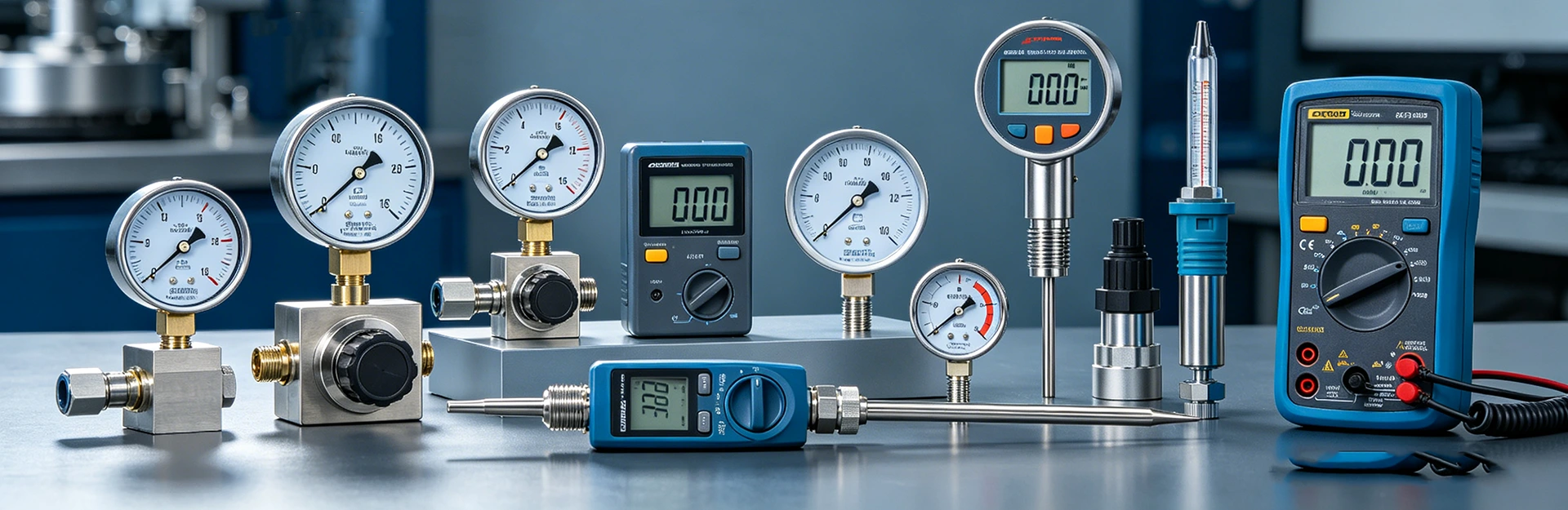
- Digital Multimeters (DMMs)
- Basic Accuracy: ±(0.5% + 2 digits)
- Measurement Functions: AC/DC Voltage, AC/DC Current, Resistance, Capacitance, Frequency, Diode Test, Continuity
- Display: 3.5 to 4.5 digit, backlit LCD
- Safety Rating: CAT III 600V, CAT IV 300V
- Special Features: True RMS, Data Hold, Min/Max/Avg, Relative Mode
- Insulation Resistance Testers (Megohmmeters)
- Test Voltage Range: 50V, 100V, 250V, 500V, 1000V
- Measurement Range: 0.01 MΩ to 10 TΩ
- Accuracy: ±(3% + 5 digits)
- Output Short-Circuit Current: >1.5 mA
- Features: PI (Polarization Index), DAR (Dielectric Absorption Ratio) automatic calculation, Timer function
- Clamp Meters
- AC Current Range: 0.1 A to 2000 A
- DC Current Range: 0.1 A to 2000 A (on specific models)
- Jaw Opening: 30 mm to 55 mm
- Basic Accuracy (AC Voltage): ±(1.5% + 5 digits)
- Inrush Current Measurement: Yes, on advanced models
2. Environmental & Temperature Analysis Instruments
For monitoring and analyzing workplace conditions, material temperatures, and ambient factors.
| Instrument Type | Key Parameter | Measurement Range | Accuracy | Probe/Sensor Type |
|---|---|---|---|---|
| Thermal Imagers (Infrared Cameras) | Detector Resolution | 160 x 120 px to 640 x 480 px | ±2°C or ±2% of reading | Uncooled microbolometer (FPA) |
| Contact Thermometers | Temperature Range | -50°C to +1300°C | ±(0.5% + 1°C) | Type-K thermocouple, PT100 RTD |
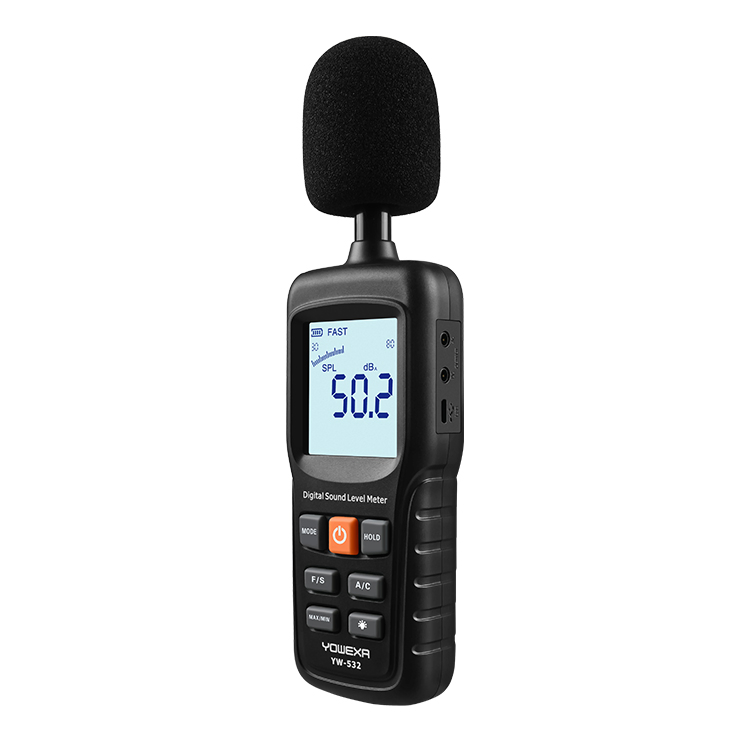
| Sound Level Meters | Frequency Weighting | 30 dB(A) to 130 dB(A) | ±1.5 dB (Class 2) | Pre-polarized condenser microphone |
| Light Meters (Lux Meters) | Illuminance Range | 0.1 lux to 200,000 lux | ±5% of reading | Silicon photodiode with filter |
3. Signal & Network Analysis Tools
Critical for telecommunications, audio engineering, and network installation.
- Oscilloscopes
- Bandwidth: 50 MHz, 100 MHz, 200 MHz, 500 MHz
- Sample Rate: 1 GSa/s to 5 GSa/s
- Channels: 2 or 4 analog channels
- Record Length: 10 kpts to 50 Mpts per channel
- Advanced Features: FFT, Serial bus decoding (I2C, SPI, CAN), Waveform math, Automated measurements
- Cable & Network Testers
- Tests Performed: Wiremap, Length, Propagation Delay, Insertion Loss, Return Loss, NEXT, PSNEXT
- Cable Types Supported: Cat 5e, Cat 6, Cat 6A, Cat 7, Coaxial
- Frequency Range: Up to 1000 MHz
- Display: Color LCD with graphical results
- Memory: Storage for 500+ test results
Frequently Asked Questions (FAQ) About Test & Analysis Instruments
General Instrument Selection & Usage
Q: How do I choose the right multimeter for my application?
A: Selecting a multimeter involves evaluating several factors. First, consider the measurement categories (CAT ratings) for electrical safety; for mains voltage work, a meter rated CAT III 600V or higher is essential. Second, assess the required accuracy and resolution – laboratory work demands higher precision (±0.1% or better) than general electrical troubleshooting (±1-2%). Third, identify the necessary functions: do you need True RMS for accurate AC measurements on non-linear loads, capacitance, frequency, or temperature? Finally, consider ruggedness, display quality, and connectivity options like Bluetooth for data logging. At instruments-meters.net, our product filters and specifications are designed to guide you through this selection process.
Q: What is the difference between a thermal imaging camera and a contact thermometer (pyrometer)?
A: A thermal imaging camera provides a two-dimensional visual map of temperature distribution across a surface or scene. It's ideal for scanning large areas, identifying hotspots in electrical panels, detecting insulation failures, or monitoring processes. It measures surface temperature without contact. A contact thermometer (or a single-spot infrared pyrometer) measures the temperature at one specific point. Contact types require physical touch, while infrared pyrometers measure from a distance but still at a single point. The camera gives contextual, comparative data, while the thermometer/pyrometer gives a precise, localized reading. The choice depends on whether you need to find a problem area or measure a known specific point accurately.
Q: Why is True RMS important in a multimeter or clamp meter?
A: True RMS (Root Mean Square) is crucial for accurately measuring AC voltage or current in circuits with non-sinusoidal waveforms. Modern electrical loads like variable-speed drives, computers, LED lighting, and UPS systems often distort the sine wave. An average-responding meter, which assumes a perfect sine wave, can under-read these distorted signals by 10% to 40%, leading to incorrect diagnostics and measurements. A True RMS meter calculates the heating value of the actual waveform, providing correct readings regardless of distortion, ensuring safety and accurate load analysis.
Technical Specifications & Calibration
Q: What do the CAT (Category) safety ratings on a multimeter mean?
A: CAT ratings, defined by the IEC 61010 standard, indicate a meter's ability to withstand voltage transients (spikes) in different electrical environments. They are about overvoltage impulse protection, not just the maximum voltage to measure.
CAT I: For electronics not connected to mains.
CAT II: Single-phase receptacle-connected loads (appliances, portable tools).
CAT III: Three-phase distribution, including commercial lighting, fixed loads, and circuit breakers. This is the minimum recommended for general building electrical work.
CAT IV: Origin of installation, such as service entrance, meter panels, and overhead/underground utility lines. The higher the CAT number and voltage (e.g., CAT III 1000V), the greater the protection against dangerous transients.
Q: How often should I calibrate my test instruments, and why is it necessary?
A: Calibration frequency depends on the instrument's usage, manufacturer's recommendations, industry standards, and the criticality of your measurements. A common interval is annually. Calibration is necessary to ensure traceability, accuracy, and reliability of your measurements. Over time, electronic components can drift, and instruments can be affected by environmental stress, mechanical shock, or normal wear. Calibration compares your instrument's readings against a known, more accurate standard and adjusts it if necessary. Using an uncalibrated instrument risks passing faulty products, misdiagnosing system issues, or violating quality and safety regulations. Many instruments from instruments-meters.net come with a calibration certificate, and we can guide you on recommended service intervals.
Q: What is the significance of 'basic accuracy' in a specification sheet?
A: Basic accuracy, often expressed as ±(X% of reading + Y digits), is the fundamental error margin of the instrument under reference conditions (typically 23°C ±5°C, low humidity). The "% of reading" term means the error scales with the value displayed – a larger reading has a larger potential error in absolute terms. The "+ digits" term accounts for error in the last digit of the display. For example, an accuracy of ±(1.5% + 3) on a reading of 100.0V means the true voltage is between 100.0 - (1.5V+0.3V) = 98.2V and 100.0 + (1.5V+0.3V) = 101.8V. This specification allows you to judge the instrument's suitability for a task requiring a specific level of precision.
Brand & Sourcing with instruments-meters.net
Q: What sets the instruments available at instruments-meters.net apart from generic tools?
A: instruments-meters.net focuses on professional-grade instruments designed for durability, accuracy, and safety. Unlike generic, uncertified tools, our products come with full technical documentation, clear safety certifications (CE, RohS, IEC standards), and traceable calibration options. We prioritize instruments with robust construction, clear displays, and ergonomic designs for daily professional use. Furthermore, we provide detailed specifications, application guides, and support to ensure you select a tool that matches your technical requirements exactly, providing long-term value and reliability rather than just a low upfront cost.
Q: Can I get technical support or application advice for a specific measurement challenge?
A: Absolutely. Our team at instruments-meters.net consists of individuals with technical backgrounds and practical experience. We encourage customers to contact us with their specific application scenarios, such as measuring inrush current on motors, selecting a thermal camera for building inspections, or choosing a data logger for environmental monitoring. We can advise on the most suitable instrument model, necessary accessories, and even best practices for measurement to help you achieve accurate and repeatable results.
- View as