
Why Does Multilayer Pipe Combine the Benefits of Plastic and Metal Pipes?
2026-07-21
1. How Does the Multilayer Structure Eliminate the Corrosion Problem of Metal Pipes?
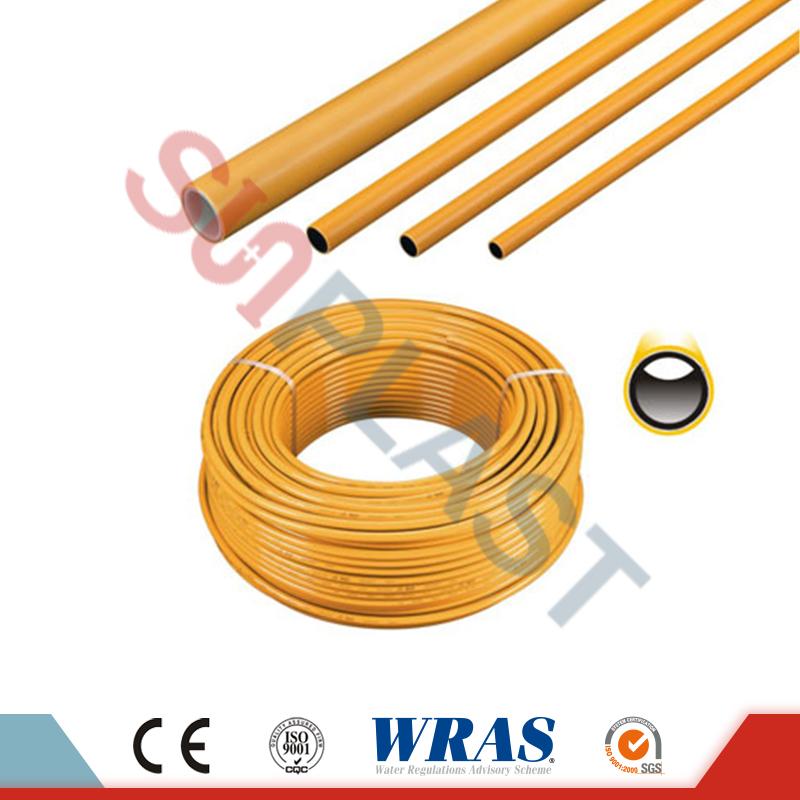
In our factory, we have produced over 50,000 kilometers of composite piping for residential and commercial projects across Europe and Asia. The main advantage of a Multilayer Pipe is that it has an inner and outer layer of crosslinked polyethylene (PE-X) or high temperature PE-RT, which completely shields the aluminum core from water and oxygen. This means no rust, no pitting, and no scale buildup. Traditional copper or steel pipes require chemical treatment or cathodic protection, but our Multilayer Pipe is inherently corrosion free. For example, a heating system using our Multilayer Pipe will not suffer from sludge accumulation, which is a common problem in steel radiators. Our Ningbo Sunplast Pipe Co., Ltd. uses a laser welded aluminum layer that is bonded with an adhesive to the plastic layers, forming a truly monolithic structure. Many local plumbers in Germany and the UK now prefer our Multilayer Pipe because they do not need to worry about galvanic corrosion when connecting to mixed metal fittings. The plastic layers also prevent the aluminum from contacting aggressive water chemistry, ensuring a service life of over 50 years.
2. Why Does the Aluminum Layer Provide Superior Oxygen Barrier Protection?
Oxygen diffusion is a silent killer in heating and cooling systems. It causes corrosion of steel radiators and pumps, reducing efficiency and leading to costly replacements. The aluminum layer in our Multilayer Pipe acts as a complete oxygen barrier, reducing oxygen ingress to less than 0.1 mg per liter per day, which is far below the industry standard of 0.3 mg. Our factory tests every Multilayer Pipe with an oxygen permeation test at 40°C. This ensures that the water in the system remains free of dissolved oxygen, preventing ferrous components from rusting. Many facility managers in the Middle East have switched to our Multilayer Pipe for chilled water systems because of this feature. The aluminum layer also provides thermal expansion stability; the coefficient of expansion of our Multilayer Pipe is 0.025 mm/mK, which is close to that of copper, eliminating the need for expansion loops in long runs. This combination of oxygen barrier and dimensional stability is something that pure plastic pipes cannot match.
3. What Are the Key Technical Parameters of Our Multilayer Pipe?
Performance is measured in numbers. Our Multilayer Pipe is available in diameters from 16 mm to 63 mm, with pressure ratings up to 10 bar at 95°C. The bonding strength between layers exceeds 25 N/cm, ensuring delamination will not occur under thermal cycling. The table below summarizes the critical specifications of our standard Multilayer Pipe for heating and plumbing applications.
| Parameter | Our Multilayer Pipe value | Typical PEX pipe (without barrier) | Copper pipe |
| Oxygen permeability (mg/m³ day) | < 0.05 (at 40°C) | 0.3 – 0.5 | 0 (metal) |
| Linear expansion coefficient (mm/mK) | 0.025 | 0.120 | 0.017 |
| Max working pressure (bar) at 70°C | 10 | 6 | 20 |
| Max working temperature (°C) – continuous | 95 | 80 | 150 |
| Bend radius (minimum, for 20mm pipe) | 5 x diameter | 8 x diameter | 10 x diameter (with bending spring) |
| Feature | Our Multilayer Pipe | Benefit to installer / end user |
| Layer bonding strength | > 25 N/cm (tested to DIN 74345) | No delamination during thermal cycling or bending |
| Surface finish | 0.4 Ra (smooth inner bore) | Lower pressure drop, less scaling |
| Joining method | Press fittings or compression | No soldering, no open flames |
| UV resistance (outer layer) | Carbon black stabilized | Can be stored outdoors for up to 12 months |
| Recyclability | Fully recyclable (aluminum and PE separated) | Reduces environmental footprint |
Our factory performs a burst test at 5 times the rated pressure for every batch of Multilayer Pipe. We also conduct a 10,000 cycle thermal shock test to simulate the most demanding heating systems. Our Ningbo Sunplast Pipe Co., Ltd. backs every Multilayer Pipe with a 25 year warranty, which covers both material and joint integrity when using approved fittings.
4. How Does Multilayer Pipe Reduce Installation Time and Labor Costs?
Installation speed is a major cost factor in large projects. A Multilayer Pipe can be cut with a standard plastic pipe cutter and joined with press fittings in seconds. No soldering, no flux, no waiting for cooling. This reduces labor time by up to 50 percent compared to copper. Our factory has conducted time trials: a 5 bedroom house with underfloor heating can be plumbed with Multilayer Pipe in 2 days, versus 4 days with copper. The flexibility of our Multilayer Pipe also allows it to be fed through tight spaces without elbow fittings, reducing the number of joints. Fewer joints mean fewer potential leak points. Many local contractors in Australia and New Zealand have reported that using Multilayer Pipe cut their total project costs by 20 to 30 percent, even though the material cost is slightly higher than plastic. The reusability of press fittings also reduces waste. In renovation projects, Multilayer Pipe can be fished through existing walls without major demolition, which is a huge advantage over rigid copper or steel pipes.
Frequently Asked Questions About Multilayer Pipe
Final Summary
Multilayer Pipe represents the best of both worlds: the corrosion resistance and flexibility of plastic, combined with the strength and oxygen barrier of metal. It offers longer service life, faster installation, and lower total cost compared to traditional pipes. Our factory has perfected the manufacturing process to ensure consistent quality and reliable performance in the most demanding conditions. For any hydronic application – heating, cooling, or plumbing – Multilayer Pipe is the smart choice. Our Ningbo Sunplast Pipe Co., Ltd. is ready to support your project with technical expertise and fast delivery.