
What Materials Are Commonly Used for Manufacturing Serrated Gaskets?
2026-07-21
1. Why Is Carbon Steel the Most Common Choice for Serrated Gaskets?
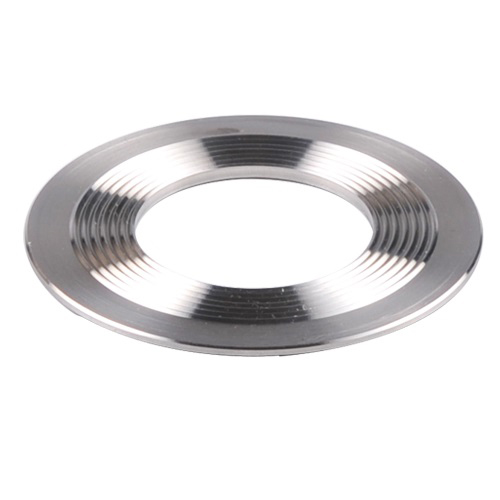
In our factory, we produce thousands of Serrated Gaskets each year for industries ranging from oil and gas to chemical processing. Carbon steel is the workhorse material because it offers an excellent balance of strength, workability, and cost. For standard applications up to 450°C, carbon steel provides sufficient creep resistance and maintains the serrations integrity under bolt load. Our Ningbo Kaxite Sealing Materials Co., Ltd uses ASTM A516 Grade 70 for most of our Serrated Gaskets. This grade has a tensile strength of 485 MPa and a yield strength of 260 MPa, which ensures the gasket bites into the flange surface without deforming permanently. In local refineries across the Gulf region, carbon steel Serrated Gaskets are the default for non corrosive services. They are easy to machine, and the serrations can be cut precisely using CNC lathes. Our factory has optimized the serration angle to 90 degrees, which gives the best grip on standard flange finishes. Carbon steel is also readily available and cost effective, making it ideal for large diameter flanges.
2. How Do Stainless Steel Grades Improve Corrosion Resistance?
For applications where carbon steel would rust quickly, stainless steel is the preferred material. Our Serrated Gaskets are commonly manufactured from 304, 316, and 316L stainless steel. Grade 316L is particularly popular because of its added molybdenum content, which resists chloride pitting. Our factory recommends 316L for offshore platforms and coastal processing plants. A Serrated Gasket made of 316L can withstand temperatures up to 550°C and pressures exceeding 250 bar. The table below compares the corrosion resistance of different materials used in our Serrated Gaskets.
| Material | Corrosion resistance (general) | Maximum service temperature | Typical application |
| Carbon steel (ASTM A516) | Poor (needs coating) | 450°C | Non corrosive hydrocarbons, water |
| 304 Stainless steel | Good (moderate acids) | 550°C | Food processing, mild chemicals |
| 316 / 316L Stainless steel | Excellent (chloride resistant) | 550°C | Offshore, chemical plants, seawater |
| Duplex 2205 | Superior (acid and chloride) | 650°C | High stress corrosive environments |
| Inconel 625 (Nickel alloy) | Exceptional (high temp acids) | 850°C | Extreme high temperature and corrosive |
| Property | Carbon steel (A516) | 316L stainless | Duplex 2205 |
| Tensile strength (MPa) | 485 | 515 | 680 |
| Yield strength (MPa) | 260 | 205 | 450 |
| Hardness (Rockwell B) | 70 | 80 | 95 |
| Recommended coating | Graphite or PTFE | PTFE (optional) | No coating |
| Cost index | 1.0 | 1.8 | 3.5 |
Our Ningbo Kaxite Sealing Materials Co., Ltd stocks all these materials and can cut Serrated Gaskets to any diameter. We also offer a duplex version for customers handling mixed acid services, which has become popular in Southeast Asian chemical plants. For highly oxidizing environments, we supply Inconel Serrated Gaskets, although they are more expensive.
3. What Role Do Coatings and Fillers Play in Serrated Gasket Performance?
Bare metal Serrated Gaskets can gall or scratch the flange surface during tightening. To prevent this, our factory applies a soft coating such as graphite or PTFE. The coating fills the microscopic valleys on the flange face and creates a compliant layer that seals even when the flange is slightly warped. Graphite coated Serrated Gaskets are common in steam service because graphite resists oxidation up to 450°C. PTFE coatings are used for aggressive chemicals because PTFE is inert to most acids. Our factory also offers a mica coating for high temperature applications where graphite would oxidize. The coating thickness is controlled to 0.05 to 0.1 mm, which ensures the serrations still bite into the flange. In addition to coatings, some designs include a soft filler in the serration grooves, such as expanded graphite tape, which provides an extra barrier. Our Ningbo Kaxite Sealing Materials Co., Ltd has tested these coated Serrated Gaskets on a helium leak test and achieved a leakage rate of less than 10⁻⁴ mbar·L/s, which is suitable for vacuum services.
4. How Does Material Selection Affect the Serration Profile and Sealing Ability?
The material hardness directly influences the serration geometry that can be achieved. Harder materials like duplex steel require more force to form the serrations, but they also hold the profile better under high bolt loads. Our factory uses a precision forming process that produces a serration peak angle of 90 degrees and a valley radius of 0.2 mm. This profile is optimized for standard flange finishes of Ra 3.2 µm to 6.3 µm. Softer materials like carbon steel can be serrated with a sharper edge, but they may flatten over time in high temperature applications. We recommend 316L for applications where thermal cycling is frequent, as it maintains its serration height better than carbon steel. The table below summarizes our material to application matrix.
| Service condition | Recommended material | Coating type | Typical flange pressure class |
| Low pressure water / air | Carbon steel | Graphite | Class 150 |
| High pressure steam (up to 450°C) | Carbon steel or 304 | Graphite | Class 600 |
| Chemical processing (acids / alkalis) | 316L or Duplex | PTFE | Class 300 – 1500 |
| Offshore / saltwater | 316L | PTFE or none | Class 600 – 900 |
| Very high temperature (> 600°C) | Inconel 625 | Mica | Class 900 – 2500 |
Our factory also considers the thermal expansion coefficient of the material. For example, a carbon steel Serrated Gasket has a coefficient close to that of carbon steel flanges, reducing thermal stress. We have seen cases where using a stainless steel gasket on carbon steel flanges caused flange distortion due to differential expansion. Our Kaxite always advises customers to match the gasket material to the flange material.
Frequently Asked Questions About Serrated Gasket Materials
Final Summary
The durability and sealing performance of Serrated Gaskets depend on the careful selection of materials, coatings, and serration design. Carbon steel is the economical choice for general service, while stainless steel and high alloys provide the corrosion resistance needed for harsh environments. Coatings and fillers extend the service life and prevent flange damage. Our factory has extensive experience in manufacturing Serrated Gaskets for demanding applications worldwide. We offer a complete range of materials and can recommend the best option based on your operating conditions. Ningbo Kaxite Sealing Materials Co., Ltd is your trusted partner for high quality sealing solutions.