
What Makes Timing Pulleys Different from Traditional Belt Pulleys?
2026-07-21
1. How Does Positive Tooth Engagement Prevent Slippage in a Timing Pulley?
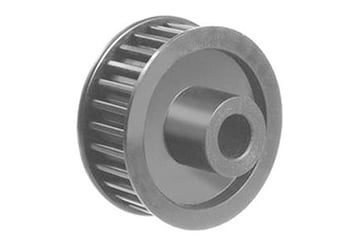
In our factory, we have manufactured power transmission components for over two decades. The fundamental difference is that a Timing pulley uses precisely machined teeth that mesh with a corresponding toothed belt, creating a positive drive system. This is completely different from a traditional belt pulley, which relies on friction between a smooth or crowned surface and a V belt or flat belt. Friction based systems are prone to slip when torque spikes occur, especially in dusty or oily environments. Our Timing pulley ensures that the driven shaft rotates at exactly the same speed as the driving shaft, with zero slip, because the teeth lock into the belt cavities. For a typical CNC machine or printing press, this absolute synchronization is critical. At Raydafon Technology Group Co.,Limited, we manufacture Timing pulley with involute tooth profiles that minimize backlash and ensure smooth load transfer. Many local automotive and packaging plants have switched to our Timing pulley to eliminate the constant retensioning required by traditional pulleys.
2. Why Does the Absence of Belt Stretch Make Timing Pulleys More Reliable?
Traditional belt pulleys depend on belt tension to transmit power. As the belt ages, it stretches, reducing tension and causing slippage. This requires frequent manual adjustment. Our Timing pulley operates with a toothed belt that does not rely on tension for torque transmission; the teeth carry the load. This means the belt can run at a lower initial tension, which reduces bearing loads and extends bearing life. Our factory tests show that a Timing pulley drive system maintains timing accuracy within 0.1 degree over its entire service life. In contrast, a traditional V belt drive can drift by several degrees, which is unacceptable for applications like camshaft drives or robotic arms. We have seen customers in the textile industry reduce maintenance downtime by 75 percent after switching to our Timing pulley systems. The belt does not stretch in the same way because the tensile cords are usually fiberglass or Kevlar, which are dimensionally stable. This reliability is why Timing pulley is the preferred choice for industrial automation.
3. What Technical Parameters Define a High Performance Timing Pulley?
Not all Timing pulley are created equal. Our factory produces pulleys in accordance with ISO 5294 and DIN 7721 standards. The key parameters are the pitch, tooth profile, and material hardness. We use S45C steel as standard, with induction hardened teeth reaching 50 to 55 HRC. For corrosive environments, we offer stainless steel and anodized aluminum. The table below outlines the typical specifications we offer.
| Parameter | Our Timing pulley specification | Traditional belt pulley (comparison) |
| Drive mechanism | Positive tooth engagement | Friction (V belt or flat belt) |
| Slip rate at full load | 0% (zero slip) | 2 – 8% (depends on tension) |
| Backlash | < 0.05° (with proper belt) | Not applicable (but play exists) |
| Required belt tension | Low (tooth engagement carries load) | High (friction requires tension) |
| Bearing load | Lower (due to low tension) | Higher (due to high tension) |
| Pitch type | Our Timing pulley (standard range) | Application example |
| T5 / T10 | 5mm and 10mm pitch (trapezoidal) | General automation, light duty |
| AT5 / AT10 | 5mm and 10mm pitch (curvilinear) | High torque, compact drives |
| H / L / XL | Imperial pitch (1/2, 3/8, 1/5 inch) | Legacy US equipment |
| 8M / 14M | 8mm and 14mm pitch (HTD) | Heavy duty industrial |
Our factory uses CNC hobbing machines to achieve a tooth profile accuracy of JIS class 4 or better. Every Timing pulley is dynamically balanced to reduce vibration. We also offer custom bore sizes and keyways to suit your specific shaft dimensions. Raydafon provides a full technical drawing with each custom order.
4. How Do Timing Pulleys Reduce Noise and Heat Generation?
Traditional V belt pulleys generate friction, which produces heat and noise, especially at high speeds. The friction also wears down the belt and the pulley grooves over time. Our Timing pulley operates with rolling engagement, not sliding friction. The teeth mesh smoothly, reducing noise levels by up to 10 decibels compared to a comparable V belt drive. The lower heat generation also means less thermal expansion, which maintains precision. In our factory, we have measured the surface temperature of a Timing pulley running at 3000 RPM; it stayed under 40°C, whereas a V belt pulley exceeded 65°C under the same load. The reduced heat prolongs the life of bearings and seals, contributing to lower total cost of ownership. Many HVAC and conveyor system operators have reported longer service intervals after switching to Timing pulley. The smooth engagement also reduces vibration, which protects sensitive components like sensors and electronics.
Frequently Asked Questions About Timing Pulleys
Final Summary
Timing pulleys outperform traditional belt pulleys through zero slip engagement, lower maintenance requirements, higher precision, and reduced noise. The positive drive system eliminates the variable speed and power loss associated with friction drives. Whether you are designing new equipment or upgrading existing machinery, choosing a Timing pulley is a long term investment in reliability. Our factory produces high quality Timing pulley with precise tooth profiles and durable materials. Raydafon Technology Group Co.,Limited is your trusted partner for power transmission solutions.