
What Factors Affect the Welding Quality of HDPE Pipe Fusion Machines?
2026-05-18
In polyethylene pipeline installation, stable heat distribution is one of the most important requirements for achieving reliable weld integrity. During butt fusion operations, uneven plate temperature often leads to weak joints, cold fusion areas, internal leakage risks, or excessive bead formation. Contractors in municipal water supply, gas distribution, mining slurry transfer, and irrigation systems usually pay close attention to heater plate accuracy before starting field operations.
Our engineering team has found that consistent temperature output directly improves fusion repeatability, especially when working with large-diameter pipelines under outdoor conditions. A professional HDPE Pipe Welding Machine should maintain stable thermal performance even during continuous production cycles.
Ningbo Sunplast Pipe Co., Ltd. manufactures fusion equipment designed for demanding jobsite environments. Our factory focuses on heating plate uniformity, digital temperature monitoring, and durable insulation systems to reduce thermal fluctuation during pipe welding procedures.
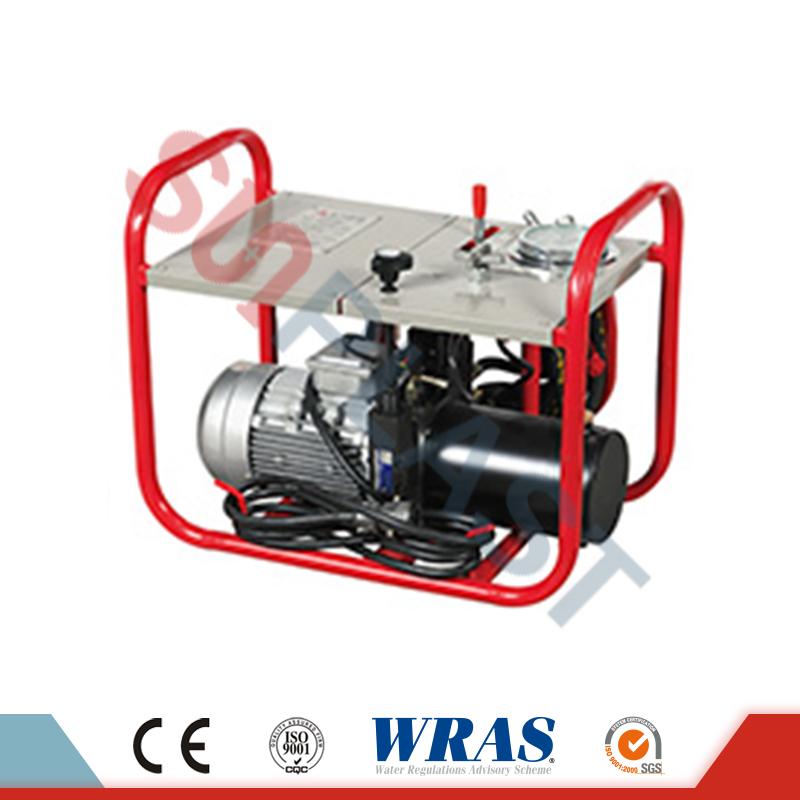
In North American and European pipeline projects, operators commonly target heating temperatures between 200°C and 230°C depending on pipe SDR rating, ambient conditions, and resin grade. If the plate overheats, oxidation can occur on the pipe surface. If the temperature is too low, the melt interface may not fully bond.
| Technical Item | Typical Industry Standard |
| Heating Plate Temperature Range | 180°C to 270°C |
| Temperature Tolerance | Within ±3°C |
| Heating Plate Coating | PTFE anti-stick surface |
| Power Supply | 220V or 380V depending on model |
| Applicable Pipe Material | PE80, PE100, PP |
How Does Hydraulic Pressure Influence Joint Strength During Fusion?
Pressure management is another key factor affecting weld consistency. During the fusion cycle, operators must apply correct drag pressure, bead-up pressure, heat soak pressure, and fusion pressure. Improper hydraulic control may cause misalignment, bead irregularity, or incomplete molecular bonding.
Experienced contractors prefer a reliable HDPE Pipe Welding Machine equipped with a stable hydraulic station because fluctuating pressure can compromise pipeline safety in high-demand applications such as gas transportation and industrial fluid systems.
Our factory uses reinforced hydraulic assemblies and calibrated gauges to improve pressure stability during field operation. This is particularly important for large-diameter PE pipe projects where weld quality requirements are strictly inspected before commissioning.
Ningbo Sunplast Pipe Co., Ltd. supplies both manual and hydraulic fusion systems for infrastructure contractors, utility installers, and industrial pipeline fabricators. Our production process includes pressure testing and operational inspection before shipment.
In practical jobsite conditions, pressure errors often come from contaminated hydraulic oil, incorrect parameter settings, or poor operator training. Maintaining proper hydraulic balance helps achieve smoother weld beads and stronger tensile performance.
Why Does Pipe Alignment Matter So Much in Fusion Welding Applications?
Even when heat and pressure are correctly controlled, poor pipe alignment can still reduce welding quality. Offset pipe ends create uneven melt flow and stress concentration areas inside the joint. Over time, these irregularities may increase the possibility of fatigue cracking or leakage.
A precision clamping system allows the HDPE Pipe Welding Machine to hold pipe sections firmly during facing and fusion stages. Alignment accuracy becomes especially important in water transmission projects where pipelines operate continuously under pressure.
Our engineering experience shows that clean pipe preparation is equally important. Pipe ends should always be faced evenly to remove oxidation and contamination before heating. Dust, moisture, grease, or scratches can weaken the fusion interface.
Many contractors in Southeast Asia and the Middle East operate in dusty outdoor environments, making surface cleaning a necessary part of the welding workflow. Our factory designs clamping systems with strong rigidity to help reduce movement during operation.
| Machine Feature | Operational Benefit |
| Four Clamp Structure | Improves pipe stability during welding |
| CNC Machined Frame | Enhances alignment precision |
| Hydraulic Drive System | Provides stable fusion pressure |
| Detachable Heating Plate | Supports easier field handling |
| Electric Facing Tool | Ensures smooth pipe surface preparation |
| Pipe Range | 63 mm to 1600 mm depending on model |
What Environmental Conditions Can Reduce Fusion Welding Performance?
Environmental factors are frequently underestimated during pipe installation. Wind, rain, humidity, and cold weather can affect cooling speed and melt consistency. In colder climates, the pipe surface loses heat rapidly, making stable fusion more difficult to achieve.
Contractors using an advanced HDPE Pipe Welding Machine often implement protective tents or wind shields to maintain stable working conditions during outdoor operations. Proper environmental management improves bead appearance and overall weld reliability.
Ningbo Sunplast Pipe Co., Ltd. has worked with pipeline installers across multiple climate regions, including tropical infrastructure projects and cold-weather utility systems. Our equipment is designed for field mobility and operational durability under different environmental conditions.
Our production team also recommends regular equipment calibration and routine maintenance. Heater plates, hydraulic seals, cutter blades, and pressure gauges should be inspected frequently to maintain stable welding performance over time.
How Does Operator Experience Affect Final Welding Results?
Even high-quality equipment depends on proper handling. Skilled operators understand heating time, drag pressure adjustment, bead observation, and cooling duration. Inexperienced handling may lead to premature movement, overheating, or incorrect parameter settings.
Professional pipeline contractors usually provide welding procedure training before project execution. A properly operated HDPE Pipe Welding Machine can produce strong, leak-resistant joints with long service life in municipal, mining, and agricultural applications.
Our technical support team regularly assists buyers with parameter recommendations based on pipe diameter, SDR classification, and local climate conditions. Our factory believes operator understanding is essential for improving installation quality and reducing costly rework onsite.
Many project supervisors also require weld logging documentation to verify process consistency. Digital monitoring systems are becoming increasingly common in large infrastructure installations because they help maintain traceable welding records.
What Questions Do Buyers Commonly Ask About Fusion Welding Quality?
Q1: What is the ideal temperature for HDPE pipe fusion welding?
A1: Most HDPE fusion procedures operate between 200°C and 230°C, depending on pipe grade, wall thickness, and environmental conditions. Stable temperature control is critical because overheating or underheating may weaken the weld joint.
Q2: Why do some HDPE weld joints fail pressure testing?
A2: Joint failure is often related to incorrect pressure settings, poor pipe alignment, contaminated pipe surfaces, insufficient heating time, or premature movement during cooling. Proper training and equipment calibration greatly reduce these risks.
Q3: How often should fusion welding equipment be maintained?
A3: Routine inspection should be performed before major projects and after intensive field use. Hydraulic systems, heater plates, cutter blades, and temperature sensors should be checked regularly to maintain accurate welding performance.
Why Is Reliable Equipment Selection Essential for Long-Term Pipeline Performance?
Pipeline systems are expected to operate safely for decades under changing pressure and environmental conditions. Choosing a dependable HDPE Pipe Welding Machine helps contractors improve installation efficiency, reduce leakage risk, and maintain consistent weld quality across large-scale projects.
Our manufacturing process emphasizes structural durability, operational accuracy, and stable field performance. From municipal water transmission to industrial fluid handling systems, our equipment supports practical fusion welding requirements across different industries.
If you are searching for reliable fusion solutions for PE pipeline installation, contact Ningbo Sunplast Pipe Co., Ltd. today. Our technical team can help you select the right welding model, pipe range, and operating configuration for your upcoming project.