
How Often Should Agricultural Gearboxes Be Serviced in Field Use?
2026-07-23
1. Why Does Field Service Frequency Differ From Factory Bench Tests?
In our factory, we run Agricultural gearboxes on test benches under controlled conditions. But the real world is far harsher. In the field, dust, moisture, and temperature swings are constant. A gearbox that can run 2,000 hours on a dyno may need service at 500 hours in a rice paddy. Our experience at Saifu Vietnam Company Limited shows that field service schedules must be based on actual operating hours, not calendar time. For a typical 80 hp Agricultural gearbox used in tillage, we recommend an oil check every 100 hours and a full oil change every 500 hours. However, if the gearbox is used in heavy clay or sandy soils, we shorten the interval to 300 hours. The key is to monitor the oil condition. If the oil turns dark or feels gritty, change it immediately, regardless of the hour meter. Our factory has developed a simple field test kit that detects water and metal particles. This proactive approach has helped many local farmers avoid costly failures.
2. What Are the Critical Inspection Points During a Service?
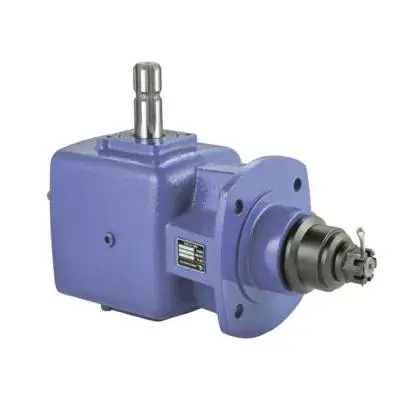
A service is not just an oil change. Our technicians check five critical areas on every Agricultural gearbox: the oil level and condition, the breather valve, the seals, the bearing play, and the mounting bolts. The breather is often overlooked, but a clogged breather can cause pressure buildup that blows out seals. We recommend cleaning the breather every 200 hours. Seal inspection is also vital; if you see oil weeping around the input shaft, the seal is likely worn and should be replaced. The table below outlines our standard field service checklist.
| Inspection item | Frequency | Action if out of spec |
| Oil level & condition | Every 100 hours | Top up or change oil; test for water |
| Breather valve | Every 200 hours | Clean or replace; ensure venting |
| Seal lip condition | Every 400 hours | Replace seal and check shaft wear |
| Bearing axial play | Every 500 hours | Adjust shims or replace bearings |
| Mounting bolt torque | Every 300 hours | Retorque to specification |
| Service type | Interval (hours) | Typical work content |
| Daily / pre start check | Every shift | Visual inspection, listen for noises |
| Minor service | 100 – 150 hours | Oil top up, breather check, bolt retorque |
| Major service | 500 – 600 hours | Full oil change, seal replacement, bearing check |
| Overhaul | 2000 – 2500 hours | Complete disassembly, gear inspection, housing cleaning |
Our factory provides a laminated service card with every Agricultural gearbox. This card lists the torque values and oil capacities specific to the model. We have found that farmers who follow this card achieve up to 40 percent longer gearbox life. Saifu Vietnam Company Limited also offers a mobile service kit that includes a filter magnet, a thermometer, and a stethoscope for listening to bearing noise.
3. How Does the Type of Farming Operation Affect Service Intervals?
Not all farm work is equal. A rotary tiller running at full depth in heavy soil puts much more stress on the Agricultural gearbox than a mower cutting grass. Our field data from rice and sugarcane farms in Vietnam shows that gearboxes used in puddling need oil changes every 350 hours, while those used in light cultivation can go to 600 hours. The presence of abrasive dust is another factor. If you operate in dry, sandy areas, the seal wear accelerates. We recommend using a seal protector boot in such conditions. For intermittent use, such as an auger that runs a few times per week, calendar time becomes relevant. We advise changing the oil at the start of each season, even if the hour meter is low, because condensation can accumulate over the off season. Our Saifu Vietnam Company Limited has developed a seasonal service kit that includes oil, seals, and a breather.
4. What Are the Warning Signs That an Agricultural Gearbox Needs Immediate Service?
Ignoring warning signs can lead to catastrophic failure. Our factory has identified four main indicators: unusual noise (whining, clunking, or grinding), excessive heat (above 85°C at the housing), oil leaks, and vibration. If you hear a whining sound, the gear mesh may be misaligned or the oil level is low. Grinding suggests bearing damage or broken teeth. Heat can be checked with a simple infrared thermometer; if the housing is too hot to touch, stop the machine. Oil leaks around the input or output shaft indicate seal wear, but they can also be caused by a blocked breather. Vibration that increases with speed is a sign of imbalance or bearing wear. Our service team recommends that you stop operation and inspect the Agricultural gearbox immediately if any of these signs appear. Continuing to run can turn a simple seal replacement into a full gearbox rebuild. Saifu Vietnam Company Limited provides a diagnostic chart that helps you identify the cause of each symptom.
Frequently Asked Questions About Agricultural Gearbox Service
Final Summary
Service intervals for an Agricultural gearbox depend on the operating hours, the type of work, and the environmental conditions. Following a structured schedule of oil checks, seal inspections, and breather cleaning can extend the life of your gearbox significantly. Our factory has seen gearboxes last over 10,000 hours with proper maintenance. The key is to be proactive and to recognize the warning signs early. Saifu Vietnam Company Limited is committed to supporting farmers and contractors with reliable products and practical service advice.