
Video Measuring Machine Supplier Selection Tips for Quality Control Managers
2026-10-04
Selecting the right video measuring machine supplier is a decision that quietly shapes your entire quality control workflow. Whether you're tightening tolerances or speeding up first-article inspections, the wrong choice leads to bottlenecks, not breakthroughs. For quality control managers, the stakes go beyond specs and price tags—it's about long-term support, software usability, and measurement confidence under real shop-floor conditions. That's why we've put together practical selection tips that cut through vendor hype. And if you're already exploring options, JATEN offers a range of precision video measuring machines built for demanding QC environments. Read on to make your next supplier decision a strategic advantage, not a recurring headache.
Make the Supplier Prove Accuracy on Your Own Parts
Don't accept tolerance claims from a supplier's marketing sheet. Send them a few of your actual production parts—machined, cast, molded, printed, whatever you use—and ask for measurement data against your own drawings. If they hesitate or say their standard samples prove enough, treat that as a warning sign.
Require a first-article inspection report that shows each critical dimension measured on your part, with the exact instrument used and the measured values. Compare those numbers to what your in-house metrology or a trusted lab gets. Discrepancies in a single feature can reveal fixturing or process problems you won't see in a generic demo.
Push further and have them run a small batch of your parts under production conditions. Ask for process capability data on the tightest tolerances—Cp and Cpk on hole positions, surface finish, or true position. This forces the supplier to prove repeatability on your geometry, material, and finish, not on a benchmark test piece that never leaves their shelf.
Look Past the Spec Sheet to Real-World Repeatability
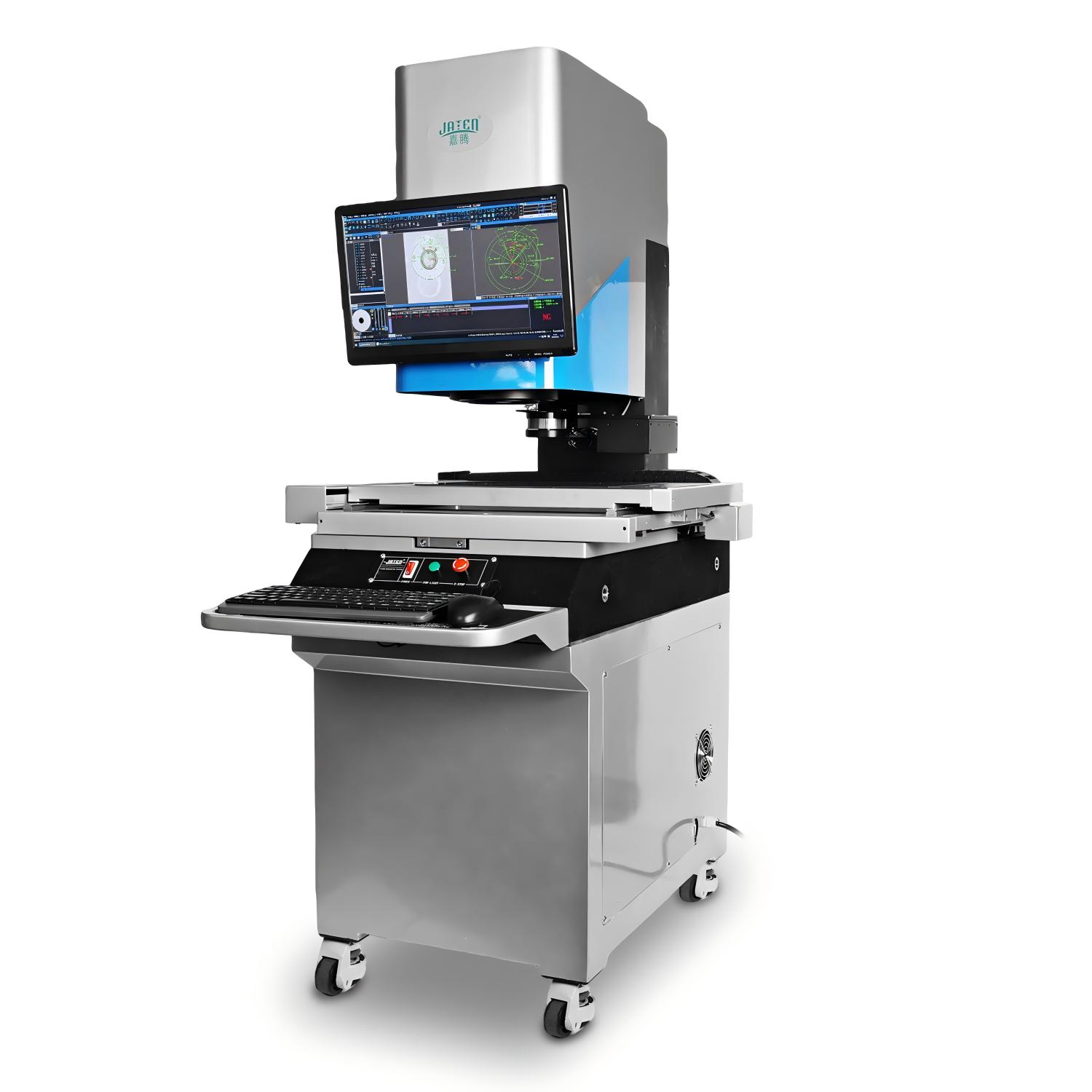
The repeatability figures printed on a spec sheet look impressive, but those numbers usually come from a temperature-controlled lab, a fresh sample machine, and ideal clamping conditions. On a real shop floor you get vibration, temperature swings between morning and afternoon, coolant splashes, and different operators applying different clamping force from shift to shift. These variables quietly eat away at on-paper accuracy. What really matters is whether the equipment can return to the same position after running for weeks in your own environment.
Repeatability is not something you measure once. It is a statistical result built from dozens or hundreds of cycles. Some manufacturers only show you the best set of data and stay silent about warm-up time, tool wear, or how changes in workpiece material affect positioning. Ask for the raw test records and look at how wide the scatter really is. A stable curve tells you more than a single impressive peak.
If you can, bring a few typical workpieces and run them yourself, or find someone who has used the same model for more than two years and ask how it holds up. It is easy for a machine to perform well right after installation. The hard part is staying consistent six months later, after a different crew has taken over. Do not let a polished brochure make the decision for you. Let your own shop floor cast the vote.
Ask About Support Before You’re Stuck Mid-Inspection
You don’t want to discover that your inspection software has no live chat or phone line when a field report won’t upload and the client is waiting. Before committing, ask exactly how support works: response times, available channels, and whether someone can take over your screen if needed. A vendor that hesitates here is telling you something.
Pay attention to how the company treats you during the trial. Do they point you to a knowledge base and disappear, or do they check in and offer real help? Mid-inspection problems rarely happen at convenient hours, so confirm weekend and after-hours coverage. If support ends at 5 p.m., that’s a risk you carry alone.
Finally, ask current users—not just the sales team—how long it actually takes to resolve issues. A quick demo can hide slow, ticket-only support. Knowing you can reach a human when a ladder is up and a sensor won’t pair is worth more than any feature list.
Judge the Software Like an Operator, Not a Buyer
Most people evaluate software the way they shop for a car—they compare feature lists, check the price tag, and get swept up by a smooth demo. But that buyer mindset misses the parts of the product that only show up after you sign the contract. An operator asks different questions: Does it crash at 3 a.m. without a clear trace? Are the logs readable when something goes sideways? Will a routine update force an hour of downtime? None of that appears on a sales slide, yet it’s exactly what determines whether the tool becomes a quiet workhorse or a daily fire drill.
Thinking like an operator also means weighing the long-term burden of keeping the thing alive. A feature-rich application can still be a black hole for your team if every config change needs a specialist, or if it relies on abandoned libraries that will haunt you during security patches. Judge the software by simulating the people who will run it: can a tired engineer diagnose an issue at midnight? Does the documentation match how the product actually behaves? When something breaks on a weekend, is the vendor or community there, or are you on your own with a stack trace?
Ultimately, treating software as a living system rather than a static purchase changes the entire evaluation. You stop asking 'what can it do?' and start asking 'what happens when traffic doubles, a dependency dies, or a disk fills up?' Does it degrade gracefully or take down the whole service? Those answers reveal whether the software is an asset or a liability—and that insight only comes from an operator’s mindset, not a buyer’s checklist.
Check How Well They Understand What You Actually Measure
A lot of measurement tools quietly assume people get what you're asking about, but that assumption can fall apart fast. One simple move is to ask them to restate the concept in their own words or give an example you haven't already used. If the answer sounds right but slightly off—like they've memorized a definition without the underlying logic—you've caught a gap that will otherwise hide in the data.
Another angle worth trying is to have them tell you what the concept is not. Have them separate it from a nearby idea that often gets confused with it. People can recite a textbook definition and still mix up two closely related constructs when the context shifts. That kind of contrast question tends to expose fuzzy understanding better than a direct definition ever will.
Watch out for answers that sound confident but don't hold up under a small twist. Someone might recognize a keyword and give a polished response, yet change their answer when you alter one detail of the scenario. That inconsistency is often the clearest signal that the measurement is picking up surface familiarity rather than the deeper understanding you intended to capture.
Weigh the Cost of Downtime, Not Just the Purchase Price
A cheap machine that sits idle for repairs every other week isn't cheap at all. When a critical piece of equipment goes down, the ripple effect hits everything: missed deadlines, overtime labor to catch up, rushed shipping fees, and sometimes even lost customers who won't wait around. Smart buyers look past the sticker and ask a tougher question—what does an hour of unplanned downtime actually cost this operation? Often that number dwarfs the savings from choosing the lower bid.
Reliability isn't a spec you can read off a brochure, but it shows up in design choices, parts availability, and a manufacturer's track record. A slightly higher upfront investment can buy you thicker frames, better seals, more accessible service points, and a local distributor who stocks common wear items. Those details mean the difference between a ten-minute adjustment and a two-day wait for a backordered component. Over a five-year lifespan, that difference compounds into thousands of dollars of recovered production time.
So when comparing quotes, don't just line up the prices side by side. Build a simple downtime cost estimate for each option: multiply expected failure frequency by average repair duration and your true hourly cost of halted operations. Then add that to the purchase price. You'll often find the "expensive" machine is actually the most economical choice, because it stays on the job while the bargain alternative is sitting in the corner waiting for a technician.
FAQ
Look beyond glossy brochures. Ask how their engineering team handles challenging geometries or reflective surfaces. A supplier who can walk you through real case studies—not just spec sheets—usually has the depth you need.
It's non-negotiable. Ask whether they provide ISO 17025-accredited calibration, how often they recommend re-verification, and whether they can service machines on-site. If they hesitate on any of these, keep looking.
The software should feel intuitive to your operators, not just demo engineers. Look for one-click routines, CAD import with GD&T, and reporting templates that match your internal formats. If you need a week of training just to measure a basic part, that's a red flag.
Request references from companies in your industry and ask about response times. Also, check whether the supplier stocks common spare parts locally. A cheap machine with slow support becomes expensive after the first downtime event.
A supplier familiar with your sector—whether automotive, medical, or electronics—understands tolerance expectations and contamination constraints. They can suggest fixturing or lighting setups that generic vendors miss, saving you months of trial and error.
Always send a few real parts, including a known difficult one. Watch how the supplier's application engineer sets up the measurement. If they only show pre-programmed demos with ideal parts, you haven't really tested their system.
Don't just compare invoice prices. Factor in training hours, annual calibration fees, software maintenance, and typical spare part costs. Ask for a five-year cost estimate. A lower upfront price often hides higher recurring charges.
Vague answers about service coverage, no local technical staff, frequent staff turnover in sales, or an unwillingness to share customer references. Also be cautious if they push a one-size-fits-all solution without visiting your facility.
Conclusion
Choosing a video measuring machine supplier starts well before you compare quotes. Ask any vendor to measure a handful of your own parts, not just their polished demo pieces. If they hesitate or blame your fixtures, that tells you more than any brochure. Look beyond stated accuracy specs and run the same part five or ten times to see how tight the spread really is in your environment. Temperature shifts, lighting, and operator habits often reveal gaps the spec sheet hides. Support matters just as much as hardware. Call their service line before you buy and see how long it takes to reach someone who can actually talk through a mid-inspection failure. If you cannot get clear help during the sales process, expect worse after the invoice clears.
Spend real time clicking through the software with the person who will run it daily. Menus that look impressive in a demo can become daily friction on the floor. A supplier who asks about the actual parts, tolerances, and reporting formats you use is already ahead of one who recites sensor resolution. Finally, calculate the cost of a down machine, not just the purchase price. A slightly cheaper system that leaves you waiting a week for parts or support can erase its savings in a single stalled production run. The right supplier proves competence on your parts, shows stable repeatability, offers reachable support, builds operator-friendly software, understands your measurement tasks, and helps you avoid costly downtime.
Contact Us
Contact Person: Volien
Email: [email protected]
Tel/WhatsApp: +86 18029161762
Website: https://www.jatentech.com/