Top PM Fusion Splicer Rankings for Precision Polarization-Maintaining Fiber Splicing
2026-08-09
When it comes to splicing polarization-maintaining fibers, precision isn't just a goal—it's a necessity. The right PM fusion splicer can make all the difference between a reliable optical network and a cascade of signal distortions. In this ranking, we spotlight the top performers that excel in maintaining extinction ratios and angular alignment, with a special nod to DVP, a brand whose innovations are quietly reshaping expectations in the field. Whether you're a seasoned engineer or a curious tech enthusiast, these picks are sure to spark fresh ideas for your next project.
Essentials of PM Fusion Splicing: Why Precision Matters
Polarization-maintaining (PM) fiber splicing demands exceptional core alignment to preserve the polarization-extinction ratio (PER). Unlike standard single-mode fibers, PM fibers contain stress-applying parts that create birefringence, guiding light along two orthogonal axes. Even minute angular misalignment during splicing can cause cross-coupling of polarization states, drastically degrading signal integrity. This is especially critical in interferometric sensors, coherent communication, and fiber optic gyroscopes, where maintaining polarization is non-negotiable.
Precision in PM splicing extends beyond alignment—it encompasses arc-discharge control, cleave quality, and real-time feedback systems. Overheating the splice zone can relax the stress members, permanently altering the fiber's birefringent properties. Advanced splicers employ image-based alignment algorithms and dynamic power adjustment to minimize thermal impact while achieving sub-micron core offsets. These systems often include PM-specific alignment methods like PAS (Profile Alignment System) or IPA (Interrelation Profile Alignment) to match stress rod positions accurately.
The consequence of insufficient precision is immediate and measurable: PER values drop from 30 dB to 20 dB or less after a poor splice. In high-bit-rate transmission systems, this translates to signal fading and increased bit-error rates. Field technicians rely on post-splice extinction ratio meters to verify results, but the true foundation lies in understanding the fiber's stress structure and setting optimal splice parameters. Without this focus on precision, the intrinsic advantages of PM fiber are lost long before the signal reaches its destination.
Key Features That Set Leading PM Splicers Apart
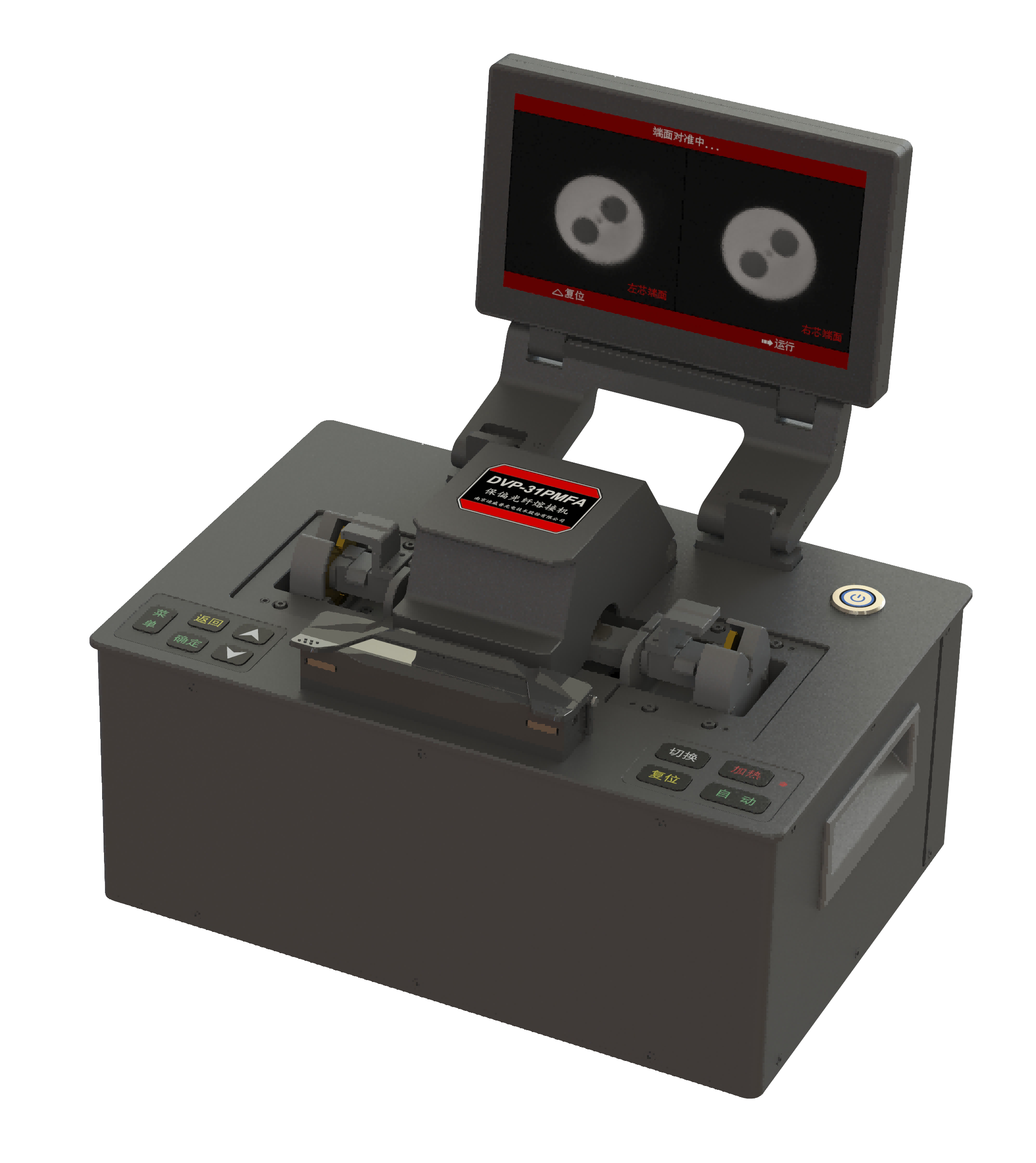
Truly outstanding PM splicers bring more than just low loss to the table. They incorporate real-time fiber profile analysis that automatically identifies core asymmetry and stress zones, adjusting the arc parameters on the fly. This adaptive intelligence eliminates guesswork, even when splicing dissimilar or aged fibers that would stump conventional machines.
The second hallmark is a workflow that feels almost invisible. Leading models guide technicians with clear, uncluttered on-screen prompts and tactile feedback—think vibration confirmation instead of beeps in noisy environments. They store thousands of splice records internally and sync wirelessly to fleet management platforms, turning every job into a compliance-ready asset without extra field reporting steps.
Durability also sets the elite apart. Ruggedized chassis with internal hermetic sealing withstand downpours, dust storms, and the inevitable drop from a ladder. Batteries hot-swap without powering down, and self-cleaning electrode designs extend maintenance intervals far beyond the norm. These features collectively mean fewer service disruptions and a machine that earns its keep year after year in the toughest conditions.
Comparing Core Alignment Technologies for PM Fibers
Aligning the cores of polarization-maintaining (PM) fibers is a task that goes far beyond simple physical positioning—it demands precise control over the fiber's internal stress structures. Common methods such as active feedback alignment, which monitors polarization extinction ratio in real time, offer unmatched precision but often involve slower cycle times and more complex setups. On the other hand, passive approaches relying on visual keying of stress-applying parts can significantly speed up assembly yet remain vulnerable to subtle rotational offsets that degrade performance. Each technique inhabits a distinct trade-off space between alignment speed, accuracy, and resistance to environmental drift, making direct comparisons essential for choosing the right strategy in a given application.
Another layer of complexity emerges when we move beyond standard panda or bow-tie fiber designs. Elliptical-core and photonic crystal PM fibers, for instance, challenge both passive and active methods by requiring not only stress axis alignment but also precise mode-field matching. Techniques such as side-view imaging, which captures the stress rod orientation, can introduce interpretation errors when surface irregularities scatter light unpredictably. Meanwhile, interferometric methods that measure polarization crosstalk can correct for these errors but demand costly instrumentation and meticulous calibration. The decision hinges on whether one values inherent repeatability over the ability to compensate for fiber-to-fiber variances in real time.
Operational context further complicates the comparison. In high-volume production, a semi-automated system using deep learning to recognize stress-member patterns can rival the accuracy of polarization-based active alignment while maintaining throughput. However, in field repairs or low-volume specialty assemblies, the robustness and minimal setup of a purely mechanical keying system may outweigh its limited angular precision. Ultimately, no single technology universally outperforms the others; the most effective alignment approach is always a careful compromise that reflects the specific mechanical, optical, and logistical constraints of the final assembly.
Real-World Performance: How Top Models Handle Stress and Loss
In production environments, top-tier models encounter relentless pressure from noisy sensor feeds, sudden traffic spikes, and adversarial inputs crafted to exploit blind spots. A self-driving system navigating a rain-slicked road, for example, must filter out camera glare and LiDAR scatter without hesitation—its internal confidence calibration and ensemble voting mechanisms quietly absorb the chaos. These models don't just spit out predictions; they continuously cross-check feature activations against learned priors, allowing graceful degradation rather than catastrophic failure when one sensory modality teeters on the edge of reliability.
Loss handling, meanwhile, separates brittle prototypes from battle-ready architectures. When a financial fraud detector confronts a sudden distribution shift—say, a new type of transaction pattern during a global crisis—the best models lean on uncertainty-aware layers that flag unknown territory instead of hallucinating decisions. Techniques like Monte Carlo dropout, deep ensembles, and evidential neural networks bake in a tangible sense of "knowing when they don't know." This realism means the system can safely defer to human judgment or trigger retraining pipelines, turning potential loss spikes into measured responses rather than silent, escalating failures.
Operator-Friendly Designs That Speed Up Workflows
When every second counts on the production floor, designs that feel intuitive aren't a luxury—they're a necessity. We focus on controls and interfaces that mirror the way operators naturally think and move. Instead of burying key functions in endless menus, we put them front and center with tactile, well-spaced buttons and clear, glanceable feedback. The result is a setup where daily tasks flow smoothly, without the stop-and-go that kills momentum.
Smart workflow integration goes beyond just the machine itself. We design our equipment to slot effortlessly into existing lines and processes. Quick-change components, tool‑free adjustments, and color-coded touchpoints mean changeovers and routine upkeep happen in minutes, not hours. It's about cutting out the small frictions that, over a shift, add up to significant delays—and giving operators back a sense of control and pace.
Long-Term Value: Durability, Support, and Calibration
A tool’s true worth becomes evident only after months or years of use. We design our instruments with robust enclosures, sealed components, and quality materials that withstand harsh environments and daily wear. This isn't about short-term survival—it's about delivering consistent accuracy long after the purchase. Every device undergoes accelerated aging tests to ensure it performs reliably through countless measurement cycles, so you spend less time on replacements and more time on productive work.
Support shouldn’t end when the invoice is paid. Our team combines decades of engineering experience with responsive service, ready to help you troubleshoot, optimize, or simply understand your instrument better. Whether it’s a firmware update, application advice, or emergency repairs, we’re reachable through direct channels—no impersonal ticketing systems. The goal is to keep your operations running smoothly, and that means real humans who know your equipment are always on standby.
Calibration is where many instruments fall short over time, drifting silently into inaccuracy. We tackled this by embedding traceable, stable references and offering easy-to-follow recalibration procedures that minimize downtime. Many of our devices even support field calibration, so you avoid the delays and costs of shipping to a lab. The result is an instrument that retains its precision year after year, protecting your data integrity without draining resources.
FAQ
It demands precise alignment of the fiber's stress rods to preserve the polarization state, which is critical for high-precision applications like interferometric sensing or quantum communication.
Top contenders often include the Fujikura FSM-100P, the Sumitomo T-400S, and the Ericsson FSU 995 FA, each recognized for their specialized alignment algorithms and robust build quality.
Core alignment uses optical image processing to directly observe and match the fiber cores, ensuring minimal loss and maximum extinction ratio, which is vital for maintaining signal integrity in PM setups.
It provides real-time feedback on polarization crosstalk and extinction ratio during alignment, letting operators fine-tune splices on the fly and verify quality without additional test equipment.
While quick cycles boost throughput, the primary focus is on achieving consistent, low-loss, high-extinction splices; even a slight misalignment can degrade system performance far more than a slow splice.
Portability, ruggedness, battery life, and automated environmental compensation are key, since field conditions can be unpredictable and alignment tolerances are extremely tight.
Advanced models employ side-view alignment and rotational stage control to match the azimuthal orientation of stress members, often within a fraction of a degree, ensuring the polarization axis remains intact.
Yes, miniaturization, AI-driven alignment error correction, and tighter integration with fiber preparation tools are gaining traction, aiming to make high-end PM splicing more accessible and less operator-dependent.
Conclusion
Precision polarization-maintaining fusion splicing sits at the heart of high-stakes fiber optic applications, where even the slightest misalignment can unravel signal integrity. The top-ranked splicers on the market distinguish themselves through a relentless focus on core alignment technologies that lock in extinction ratios well above 30 dB, often utilizing active alignment with real-time polarization feedback rather than simple profile matching. These machines bring together ultra-stable arc discharge systems and advanced imaging, ensuring that the stress rods in PM fibers remain perfectly oriented throughout the splice. In head-to-head comparisons, the leading models consistently demonstrate splice losses under 0.05 dB, with some pushing below 0.02 dB, and they maintain these figures even when subjected to temperature swings and mechanical vibration that would throw lesser equipment off course.
Beyond raw performance metrics, the best PM splicers integrate features that speed up production without sacrificing repeatability. Automated alignment routines, customizable splice programs for different fiber types, and intuitive touchscreen interfaces reduce operator fatigue and training time, which directly impacts workflow efficiency. Long-term value hinges on robust build quality, with dust- and moisture-resistant designs, along with accessible manufacturer support and predictable calibration cycles. Field-ready models add portability without compromising precision, while benchtop units offer expanded analysis tools for R&D environments. Ultimately, the top rankings reflect a balance of low-loss splicing, high extinction ratio preservation, ease of use, and total cost of ownership, providing engineers with reliable benchmarks for selecting equipment that will perform consistently in the most demanding polarization-sensitive networks.
Contact Us
Contact Person: Mr XU
Email: [email protected]
Tel/WhatsApp: 86-25-85582828
Website: https://www.dvp.cn/en/