
Household Air Purifier Manufacturer Reveals Key Features to Consider for Cleaner Indoor Air
2026-09-27
Most buyers chase decibels or sleek shells, then wonder why allergies cling to every room. As a household air purifier manufacturer that has tested units in real living spaces, LUFUTATECH knows clean air comes down to less obvious details. Here are the features that actually make a difference—before you waste money on another fan with a filter.
What CADR Leaves Out: The Real-World Test Conditions Behind the Number
The CADR figure comes from a sealed chamber where a single burst of smoke or dust is released and the air purifier runs at top speed with no obstacles in the room. Real living spaces rarely work that way. A sofa, a bookshelf, or a partially closed door can trap particles and create dead zones where the air barely moves, so the purifier never gets a chance to clean what it cannot reach. In many homes, the actual airflow pattern is shaped more by HVAC vents, open windows, and foot traffic than by the appliance itself.
Another gap appears when you look at how pollution enters a room over time. The CADR test measures a single injection of particles, but in daily life, cooking fumes, pet dander, and outdoor pollutants trickle in continuously. An air purifier with a strong CADR score may still struggle to keep up with a gas stove that keeps emitting particles every few minutes, because the test never simulates that kind of persistent source.
Filter aging is also left out. CADR is measured with a fresh filter under ideal conditions, yet every filter gradually loads with dust and loses airflow. A unit that starts with impressive numbers can drop off noticeably after a month of heavy use, especially in homes with pets or smokers. The number on the box does not tell you how well the purifier will perform on day 60 or day 90, when the fan speed may need to be higher just to maintain the same clean air delivery.
HEPA Is a Starting Point, Not a Finish Line: Filter Media Differences That Matter
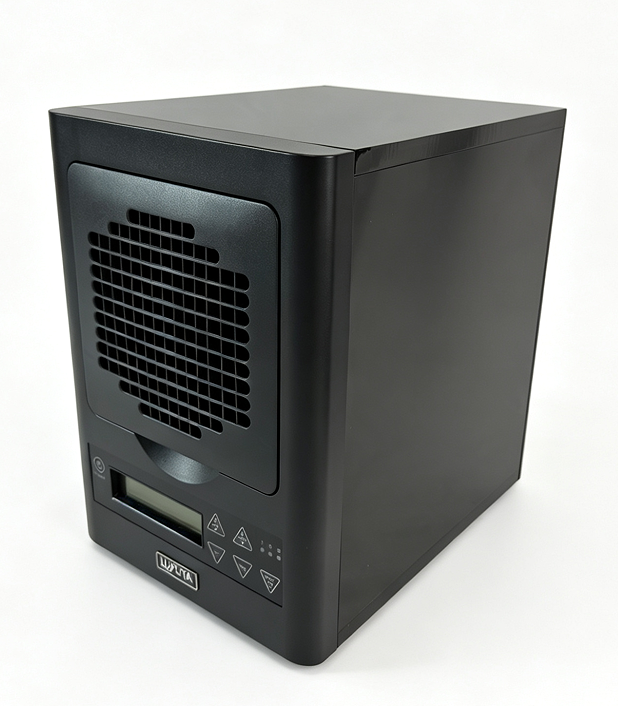
A HEPA label tells you the filter passed a standardized test, but it doesn't tell you how it got there. Two filters can both capture 99.97% of particles at 0.3 microns, yet one might choke airflow within weeks while the other holds steady for months. The difference lives in the media itself: the blend of fibers, how densely they're packed, and whether the pleats are evenly spaced or prone to collapsing under pressure.
Cheap glass-fiber media often meets HEPA specs on day one, but its stiff, brittle structure creates high resistance and can shed tiny fibers into the air stream. Synthetic media, especially layered polypropylene with graded density, tends to maintain lower pressure drop over time while trapping particles throughout the depth rather than just on the surface. That depth-loading behavior is what separates a filter that needs replacing every quarter from one that runs quietly for a year or more.
Pleat geometry matters just as much as raw material. Wide, shallow pleats may look efficient but can blind quickly with fine dust; narrow, deep pleats give more surface area but require a media that won't flex and touch under suction. The best designs use variable pleat spacing or embossed separators to keep every fold working. If you only check the HEPA badge, you miss these mechanical realities that decide whether the filter actually cleans your air or just restricts it.
Why Your Air Purifier Sounds Louder Than Its Spec Sheet Claims
Most spec sheets list noise levels from the lowest fan setting, measured in a semi-anechoic chamber at one meter away. That's a best-case scenario your living room never replicates. On medium or high, which you'll actually use to clear allergens or smoke, the sound pressure can jump by 10–15 dB—perceptually nearly twice as loud. Add a hard floor, a corner placement, or a nearby wall, and reflections push the perceived volume higher still.
Another gap comes from the weighting curve used in the lab. Manufacturers often report dBA, which discounts low-frequency rumble. But the motor and fan assembly in a compact purifier often produce a noticeable hum in the 100–300 Hz range. Your ears pick that up as a low drone even when the dBA number looks modest. If the purifier has a true HEPA filter, the dense media also creates more back pressure over time, forcing the fan to work harder and louder as dust loads up.
Finally, your own room is never as quiet as the test booth. At night, with the fridge cycling and traffic noise dropping, the purifier's fan becomes the dominant sound. Spec sheets rarely mention that the "whisper-quiet" 24 dB mode assumes a background of 20 dB or less—something most urban bedrooms exceed anyway.
The Air Change Equation: How Room Dimensions Make or Break Performance
Room dimensions affect ventilation far more than most people realize. A space with the same floor area but a higher ceiling holds a larger volume of air, so the same supply airflow results in fewer air changes per hour. If you compare two rooms of 20 square meters, one at 2.4 meters tall and another at 3 meters, the second has 25% more air to move before achieving the same turnover.
Layout matters just as much as volume. In long, narrow rooms or spaces with offset doorways, air tends to follow the shortest path between supply and return, leaving stagnant corners even when the calculated air change rate looks adequate. The equation only tells you the average; the room's proportions decide whether that average is actually reached where occupants breathe.
Before choosing equipment, work from cubic volume rather than floor area. If you change ceiling height, partition a space, or add a mezzanine, the air change equation shifts. Recheck the numbers after any dimensional change—what worked in the original footprint can quietly underperform once the envelope grows.
Activated Carbon Isn't a Magic Odor Eraser: What It Actually Captures
Walk down the air purifier aisle and you'll see activated carbon filters marketed as if they can swallow every odor in your home, from last night's fish dinner to the musty smell in the basement. The reality is far more modest. Activated carbon works through adsorption—a surface-level process where gas molecules cling to the porous carbon—but this only works well for a specific range of chemicals. Volatile organic compounds like benzene, toluene, and certain paint fumes get trapped reasonably well. So do some sulfur-based odors and light pet smells. But if you're hoping it will erase ammonia from a litter box or formaldehyde from new furniture, you'll be disappointed; those molecules are either too small, too polar, or simply not sticky enough for standard carbon.
The biggest misconception is that carbon removes odors permanently. In practice, it's more like a crowded parking lot: once the available pores fill up, new odor molecules just drive on by. High humidity makes things worse because water vapor competes for the same binding sites, effectively reducing the carbon's capacity before it ever meets an odor molecule. That's why a carbon filter that worked for a month in winter might seem dead by summer. And no, putting it in the sun doesn't magically restore it—most household carbon filters are not designed to be regenerated, despite what online DIY guides suggest.
So what does activated carbon actually capture? Think of it as a specialist, not a generalist. It's useful for lingering organic vapors from cooking oils, mild cigarette smoke, and some outdoor pollution that drifts inside. It can take the edge off a new carpet's off-gassing or a fresh coat of paint. But for heavy, persistent odors—urine, mold, sewage, or strong chemical spills—you're better off addressing the source directly. Carbon can help manage what's left in the air, but it won't win a fight against an active odor generator. Knowing its limits will save you money and keep your expectations realistic.
The Hidden Running Costs: Filters, Electricity, and the Five-Year Reality Check
Most buyers fixate on the upfront price, but the ongoing expense of replacement filters can quietly dwarf that initial figure. A mid-range purifier might ship with a filter rated for six months, yet many households run it 24/7 in dusty or pollen-heavy environments, cutting that lifespan to four months. At $25 to $50 per cartridge, that's $75 to $150 a year just to keep the machine doing its job. Over five years, you're looking at $375 to $750 in filters alone—often more than the device itself cost. Ignore this line item and the bargain air cleaner becomes a subscription service in disguise.
Electricity is the quieter expense because it's spread across your monthly utility bill and rarely itemized. A typical air purifier draws 40 to 70 watts on medium speed. Run it continuously, and that's roughly 350 to 610 kilowatt-hours per year. At an average U.S. residential rate of 16 cents per kWh, you're adding $56 to $98 annually to your power bill. It doesn't sound like much until you realize a budget model with an inefficient motor can consume nearly twice the energy of a premium one. The difference in lifetime electricity cost between two similarly priced units can easily exceed $200 over five years.
The five-year reality check forces you to stop thinking in terms of purchase price and start thinking in terms of total cost of ownership. Take a $200 purifier with a $40 annual filter and 50 watts of continuous draw. Five-year total: $200 + $200 (filters) + $70 (electricity) = $470, not including tax, shipping, or unexpected repairs. Now compare that to a $350 unit with a washable pre-filter that extends the main filter to 12 months and a more efficient 30-watt motor. Five-year total: $350 + $175 (filters) + $42 (electricity) = $567. Surprisingly, the pricier machine is only $97 more over five years—and often quieter, better built, and backed by a longer warranty. That's the hidden math most buyers never see until it's too late.
FAQ
The filtration system. A high-efficiency HEPA filter paired with a substantial activated carbon layer captures fine particles and odors, but the real difference comes from filter depth and seal quality, not just the label.
Instead of relying on square footage alone, check the clean air delivery rate at the fan speed you'll actually use. A unit rated for 500 square feet may only deliver half that performance on a quiet setting.
That scent usually comes from off-gassing of new materials or adhesives inside the casing. Running the unit in a well-ventilated room for 24 to 48 hours often clears it, but premium models use low-VOC materials to avoid it altogether.
Noise is frequently underestimated. Look for a sleep mode that stays under 30 decibels, otherwise the machine becomes a nuisance and people turn it off, losing all filtration benefits overnight.
Generally no. Washable filters tend to lose efficiency after repeated cleaning and can trap moisture, leading to mold. Disposable filters with a clear replacement schedule deliver more consistent performance.
Pre-filters and air inlets gather dust quickly, and clogged vents force the motor to work harder. Wiping the exterior and vacuuming the pre-filter every two weeks can extend the lifespan significantly.
Real-time particle sensors let the unit ramp up only when pollution spikes, which saves energy and reduces constant high-fan noise. The best implementations also track filter life by actual airflow, not just hours of use.
Conclusion
Most air purifier specs look impressive on paper, but a manufacturer's own testing often reveals a messier reality. CADR, for instance, gets measured in a compact chamber with ideal mixing—conditions your living room rarely matches. The number might claim 300 cubic feet per minute, yet furniture, corners, and even humidity can cut real-world delivery by a noticeable margin. That's why a unit's fan and airflow path deserve as much scrutiny as the badge on the box. HEPA media also varies far more than the label suggests. A true HEPA filter catches particles at 0.3 microns, but the density, pleat depth, and gasket seal determine whether that rating holds after weeks of use. Some low-cost filters rely on thin mats that pass the test once but fade quickly, letting fine dust slip back into the room.
Noise is another spec that rarely survives first contact with a bedroom. A machine rated at 50 decibels on low may emit an irritating whine at medium speed because of motor resonance or case vibration. Before buying, think about the actual room size: air changes per hour matter more than a single CADR number. A purifier that works in a 200-square-foot space can barely turn over the air in a large open-plan area. Activated carbon adds a false sense of security, too—it adsorbs some VOCs and cooking smells but does little for formaldehyde or fresh pet odors unless the carbon bed is thick and frequently replaced. And then there's the five-year bill. Filters often cost nearly as much as the unit itself, and running the fan around the clock can add a surprising amount to electricity. A cheap upfront price may hide hundreds in maintenance over the life of the product.
Contact Us
Contact Person: Paul Luo
Email: [email protected]
Tel/WhatsApp: 0086-19966314501
Website: https://www.lufutatech.com