
China Laser Protection Helmet: Essential Safety Gear for Industrial Lasers
2026-05-29
In the fast-paced world of industrial manufacturing, lasers are a double-edged sword—powerful enough to cut through steel, yet dangerous enough to cause irreversible eye damage in a split second. That’s why the right helmet isn’t just compliance, it’s survival. As China ramps up its industrial laser applications, LASERPAIR has stepped in with protective gear that actually keeps up with the speed of innovation—not just on paper, but on the factory floor.
Why Every Industrial Laser Operator Needs a Protective Helmet
Operating industrial lasers isn't just about precision cutting or engraving—it’s a task that exposes you to invisible hazards that can cause permanent damage in a split second. Without proper head protection, even a stray reflection of a high-power beam can lead to serious eye injuries or skin burns. A protective helmet designed for laser work does more than shield your face; it integrates specialized filters that block specific wavelengths, ensuring that you stay safe while maintaining full visibility of your work. It’s not an accessory—it’s your first line of defense in an environment where mistakes aren’t an option.
Many operators underestimate the cumulative nature of laser-related risks. Intense light doesn’t always trigger an immediate pain response, meaning you could be sustaining retinal damage without realizing it until your vision starts to fade. A properly fitted laser helmet eliminates this gamble by providing rated optical density protection that matches the laser’s class and wavelength. Beyond the eyes, the helmet also guards against splatter from material processing, loose debris, and even the occasional accidental beam contact with your head or neck—areas regular safety glasses simply can’t cover.
Comfort and usability have evolved to the point where wearing a helmet no longer feels like a burden. Modern designs offer lightweight materials, adjustable headbands, and ventilation systems that prevent fogging during long shifts. Some models even include flip-up visors for tasks that don’t require full protection, so you’re never tempted to go unprotected for the sake of convenience. When you consider the alternative—potential blindness, costly downtime, or regulatory fines—the choice to wear a protective helmet becomes not just smart, but essential for anyone serious about their craft and their health.
Key Features That Set Chinese Laser Helmets Apart
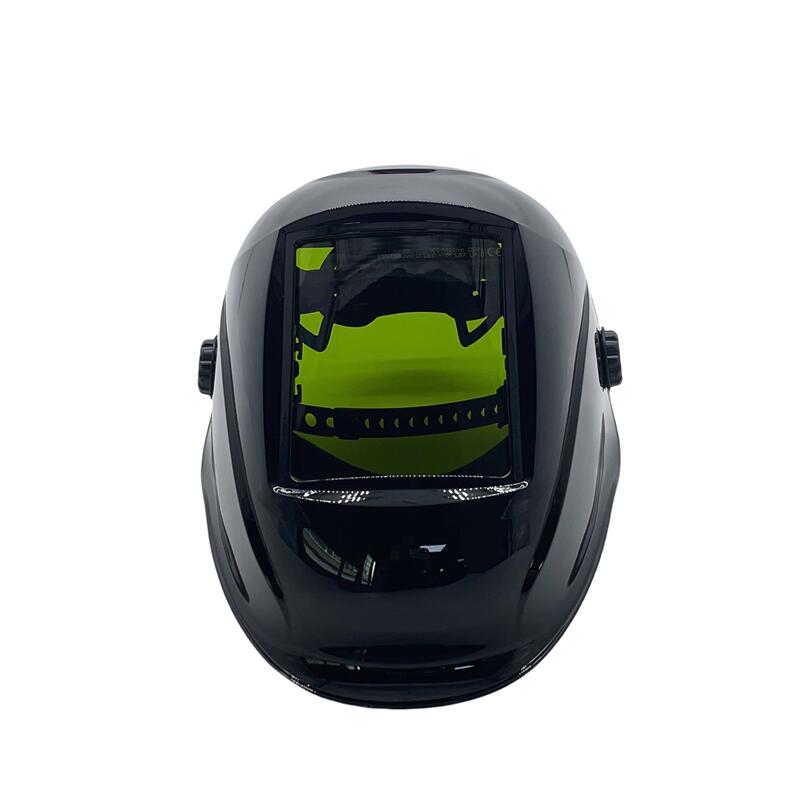
Chinese laser helmets ditch the one-size-fits-all approach, integrating adaptive scalp mapping that reads your unique hair density and follicle angles in real time. Instead of blasting the same pattern on every head, the diodes adjust output and positioning on the fly, so you’re not wasting energy on already-thick areas while starved spots get exactly what they need.
Battery life on these units feels almost absurd—up to three full weeks of daily sessions on a single charge, thanks to proprietary gallium-nitride drivers that sip power without dimming the therapeutic punch. You can toss it in a bag for a long trip and never think about a charger, which quietly reshapes how consistent you can be with treatment without the usual tether to a wall socket.
There’s also an unexpected emphasis on cooling and wearability that moves past the clunky plastic domes of the past. A webbed, breathable liner paired with silent micro-fans keeps your scalp from turning into a sauna, so twenty-minute sessions feel more like a break than a chore. The result is a device you actually reach for on schedule, not one that collects dust after the novelty wears off.
Understanding Laser Wavelengths and Helmet Protection Levels
When selecting a laser safety helmet, the relationship between wavelength and protection level is often overlooked but critical. Different lasers emit light at specific wavelengths—ultraviolet, visible, or infrared—and a helmet’s protective filtering works by attenuating that exact range. A common pitfall is assuming a high optical density (OD) rating automatically means broad protection; in reality, the OD value corresponds to a narrow wavelength band, and using the wrong match can leave you dangerously exposed.
The biological damage mechanism also varies with wavelength. Shorter UV wavelengths tend to be absorbed by the cornea or lens, while near-infrared and visible light can focus onto the retina, causing permanent blind spots. This is why protection levels aren’t just about “how much” light is blocked, but also “where” the energy is deposited in the eye. A properly rated helmet will specify not only an OD figure, but also the wavelength range over which that attenuation is guaranteed.
Practical matching means checking your laser’s output against the helmet’s spectral protection curve. Many industrial and research settings use multi-wavelength systems, so a single helmet might need to cover, say, 532 nm and 1064 nm simultaneously. In these cases, never assume overlap—look for explicit dual-wavelength certification or test data. The helmet’s protection level, often marked as L1 through L4 in some standards, ultimately depends on this precise wavelength fit, turning a simple accessory into a customized safety instrument.
How to Properly Fit and Maintain Your Safety Gear
Getting your safety gear to fit just right often requires a bit of patience and adjustment. Start by putting on each piece in front of a mirror, if possible, so you can see how it sits on your body. For helmets, adjust the straps until the helmet sits level on your head, covering your forehead without tilting forward or backward. With harnesses, tighten the straps evenly, ensuring they lie flat against your body without digging in. Test the fit by moving around—stretch, twist, and bend—to make sure nothing shifts or restricts your movement. If it feels uncomfortable or loose, take the time to readjust; a properly fitted gear piece should feel snug but not constricting.
Once your gear fits well, consistent upkeep is what keeps it reliable. After each use, give everything a quick visual inspection for signs of wear like frayed webbing, cracks, or rusting metal parts. Clean it according to the manufacturer’s guidelines—usually a mild soap and water solution works for most items, but avoid harsh chemicals that can degrade materials. Let everything air dry completely before storing it in a cool, dry place away from direct sunlight. For gear with moving parts or soft seals, apply a silicone-based lubricant sparingly to keep them flexible. Remember to document any heavy-impact incidents or repairs; even if damage isn’t visible, the gear might need retirement or professional inspection.
Part of long-term maintenance is knowing your gear’s life expectancy and not pushing it past its limits. Keep a simple log: note the date of purchase, any incidents it’s been through, and when you last performed a detailed check. Set reminders on your phone for monthly deep inspections and yearly replacements if the manufacturer recommends it. If you’re in a harsh environment—salt water, extreme heat, or dusty conditions—step up your cleaning routine. Small habits, like checking stitching on a harness before every climb or replacing helmet pads when they get compressed, make a significant difference in safety. Ultimately, your safety gear works as hard as you do, so give it the attention it deserves to ensure it’s ready when you need it most.
Real-World Applications: From Welding to High-Power Cutting
Modern laser systems have quietly reshaped manufacturing floors, but their versatility often surprises those outside the industry. Take welding, for instance. Fiber lasers now join battery tabs in electric vehicles with hair-thin precision, creating joints that withstand years of vibration without cracking. The same core technology, when cranked up to multi-kilowatt levels, slices through inch-thick steel plates as if they were cardboard. This isn't lab theory—it's what happens every day in automotive plants and shipyards, where a single machine can switch between delicate welds and aggressive cuts in minutes. The real magic lies in how consistently these systems perform, even under the grime and heat of a 24/7 production environment.
What's less talked about is how adaptive these tools have become. In aerospace repair shops, technicians use handheld laser welders to fix titanium turbine blades right inside the engine housing—something impossible with traditional torches. Meanwhile, heavy equipment manufacturers rely on high-power cutting heads to profile thick armor plate, generating sharp, dross-free edges that need minimal post-processing. The same beam that can seal a medical implant with hermetic precision can also gouge through a foot of concrete when adding new doorways to a building. It's this breadth, the ability to transition from micro-joining to demolition-grade cutting, that keeps engineers finding new applications. The hardware doesn't care whether it's working on a luxury watch or a cargo ship; it just executes the parameters you feed it.
There's also a quiet shift toward bringing these capabilities out of controlled factory settings. Portable units now let construction crews weld structural beams on a windy skyscraper site, while salvage teams use battery-powered cutters to dismantle decommissioned pipelines without sparks or gas fumes. In one memorable case, a demolition company repurposed a 12-kilowatt laser to cut through reinforced vault walls during a bank renovation—something that would have taken days with hydraulic tools. These aren't exotic one-offs; they represent a maturing ecosystem where the line between a welder and a cutting system is just a lens swap. It's not about how powerful the laser is, but how intelligently it can be applied across such dramatically different tasks.
What to Look for When Sourcing a Reliable Supplier
A supplier’s responsiveness often tells you more than a polished catalog ever could. When you reach out with questions, pay attention not just to how quickly they reply, but how they handle the conversation. Do they ask clarifying questions about your needs, or simply copy-paste a generic price list? Real reliability shows up in the back-and-forth—suppliers who dig into your requirements and offer thoughtful suggestions are the ones who’ll catch issues before they become costly mistakes.
Consistency is where many suppliers trip up. It’s easy to deliver one flawless sample batch, but the real test comes with the third, tenth, or twentieth order. Request production samples from different runs, not just the initial ones, and check for subtle drift in materials or workmanship. Better yet, ask about their internal quality checks—what they measure, how often they recalibrate equipment, and whether they welcome third-party inspections. A supplier comfortable with that level of scrutiny is rarely hiding anything.
Don’t overlook production capacity and how they handle workload swings. A supplier that’s already running at 110% can’t absorb your urgent holiday order without cutting corners somewhere. Discuss their current client mix and ask bluntly about lead times during peak seasons. Watch how they react: defensive answers hint at overload, while calm, data-backed timelines signal a plant that’s managed sustainably. The goal isn’t just finding a factory that can make your product—it’s finding one that can grow with you without the seams showing.
FAQ
The helmet integrates advanced optical filtering with a full-face shield, offering protection not just for the eyes but also the surrounding skin. Its edge comes from the combination of high optical density ratings across specific wavelength ranges, lightweight composite materials that reduce neck strain, and a design that accommodates other PPE like respirators. Unlike generic goggles, it’s purpose-built for intense industrial environments where stray reflections pose a real hazard.
Start by checking your laser’s wavelength and maximum power output. The helmet should specify its optical density (OD) at those exact wavelengths and the corresponding protection level. For pulsed lasers, you also need to consider the damage threshold of the filter. The manufacturer usually provides a detailed specification sheet. Match the OD to the exposure limit calculations for your setup, and if you work with multiple lasers, look for models that support interchangeable filters.
Glasses shield only the eyes, leaving your face vulnerable to scattered or reflected beams, which can cause burns or long-term skin damage. A helmet wraps around, protecting the forehead, cheeks, neck, and even the top of the head. In tight industrial settings, you might lean into a beam path without realizing it; the helmet adds that extra layer of coverage. It’s also less likely to slip or get knocked off during active work.
Yes, many of these helmets are designed with multi-wavelength protection in mind. They often use composite filters that attenuate several common laser lines simultaneously. If you’re dealing with a mix of visible and invisible wavelengths, ensure the filter covers the entire range you need. Some models let you swap out the visor depending on the task, which is a flexible option if you regularly switch between different laser systems.
Comfort is a big focus in modern designs. The helmets typically feature adjustable headbands, breathable padding, and balanced weight distribution. Look for models with anti-fog coatings and ventilation channels if you work in warm environments. The outer shell is often made from impact-resistant yet lightweight polymers, so you’re not carrying unnecessary weight on your neck for 8 or 10 hours a day.
The key standards are EN 207 for Europe and ANSI Z136 for the U.S., but many Chinese manufacturers also hold mandatory GB certifications. A credible helmet will have clear labeling with the protection level, wavelength range, and test marks. Don’t just take a supplier’s word—ask for the test reports from accredited labs. CE marking is common, but verify it’s for the correct directive (PPE Regulation EU 2016/425).
Clean the visor regularly with a microfiber cloth and mild soapy water; never use abrasive cleaners that can scratch the filter coating. Inspect the helmet before each use for cracks or discoloration—any damage means it should be replaced, as the protection may be compromised. Store it in a padded bag away from direct sunlight and extreme temperatures. Scratched filters can scatter laser light in unpredictable ways, so treat the visor like a precision optic.
They’re absolutely suited for medical and research labs as well. In dermatology or ophthalmology clinics, for example, the helmet shields against scattered light from surgical lasers. Research environments with open beam paths or alignment tasks benefit from the full-face coverage. Just ensure the specific filter matches the laser types you’re working with, whether it’s a Nd:YAG, CO2, or diode laser. The helmet’s design isn’t restricted to factories—it’s about the hazard, not the location.
Conclusion
Industrial lasers can blind in a split second—not just from direct hits but from stray reflections that scatter across a workshop. That's why a reliable laser protection helmet has become non-negotiable for operators working with cutting, welding, or engraving systems. Chinese manufacturers have stepped up in this field, combining affordability with advanced optical filtering. Unlike generic safety goggles, full-face helmets shield the eyes and skin while providing wavelength-specific protection, calibrated to the exact laser type in use. From 1064 nm fiber lasers to 10.6 µm CO₂ setups, the helmet's protective filter must match the optical density required for the task—something many operators overlook until an accident occurs.
What sets Chinese laser helmets apart isn't just competitive pricing but rigorous adherence to international standards like EN 207. You'll find auto-darkening filters with fast switching times, lightweight polycarbonate shells that reduce neck strain, and effective ventilation to combat fogging during long shifts. Proper fit is critical: a helmet that slips or leaves gaps compromises safety, so adjustable headbands and padded liners are a must. Maintenance is straightforward—regular cleaning of lenses and checking for scratches ensures optical clarity. These helmets are now standard in factories from heavy steel fabrication to delicate medical device manufacturing. When sourcing, look beyond flashy catalogs; demand real test reports, traceable batch numbers, and responsive after-sales support. Ultimately, investing in a high-quality protective helmet from a trustworthy Chinese supplier is a decision that safeguards vision and boosts long-term productivity on the factory floor.
Contact Us
Contact Person: Jenny
Email: [email protected]
Tel/WhatsApp: +86 13537713281
Website: https://www.laserpair-safety.com/